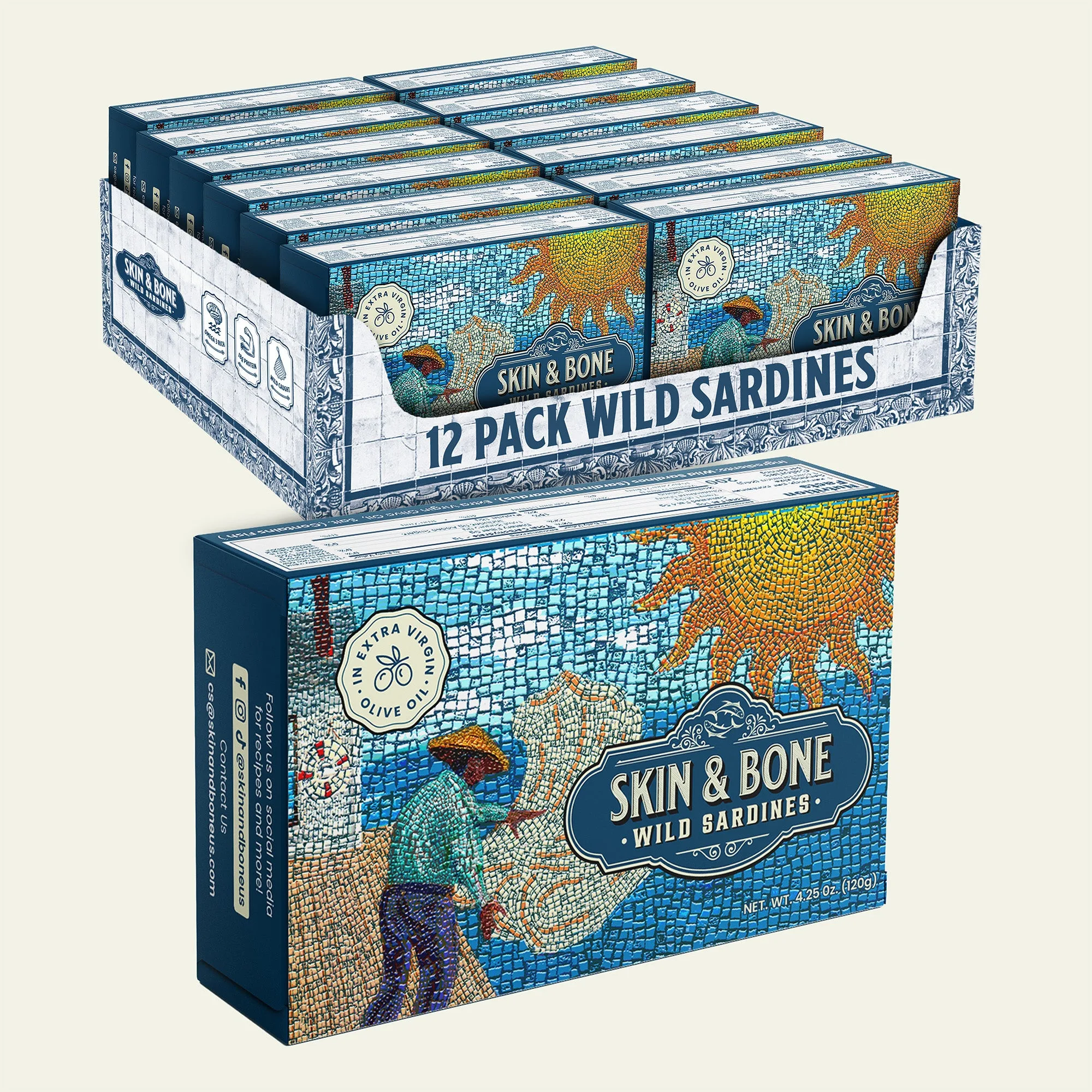
Use code CALEB for 10% off
Apply at checkout on skinandboneus.com — works on any pack, including The Tin Club subscription.
If you're here for "are Skin and Bone sardines actually worth it" — the short answer is yes, and I'll show my work. If you're here as a fellow entrepreneur trying to figure out why a small US sardine brand is generating word-of-mouth out of thin air, stay through the end. There are real lessons in this tin.
Part One: The Honest Review
Stephanie and I have been running through tins of Skin and Bone for several months. We started on a 6-pack as a try-it-once experiment and have been reordering ever since — eventually putting it on subscription. That fact alone is the review — we're not a household that subscribes lightly.
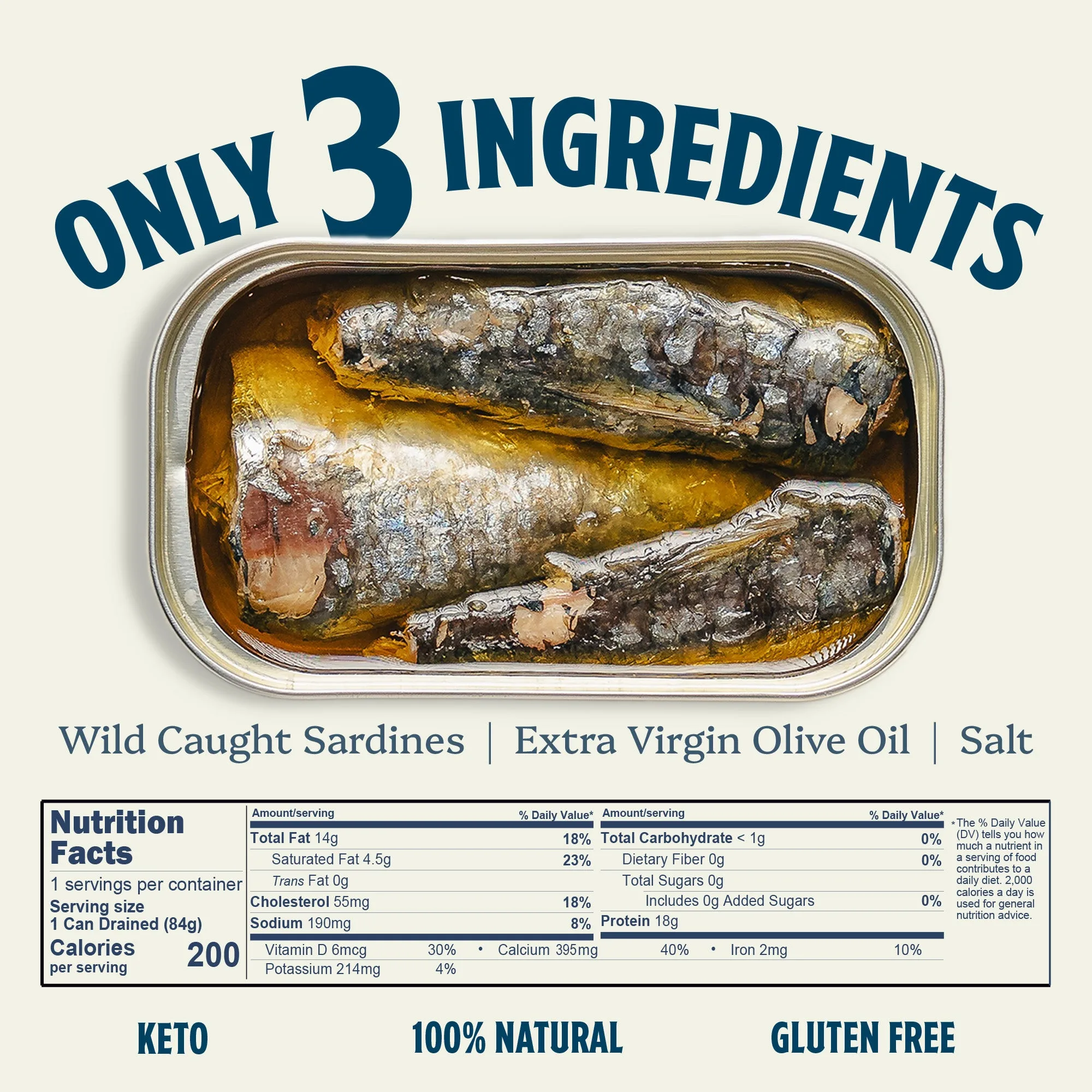
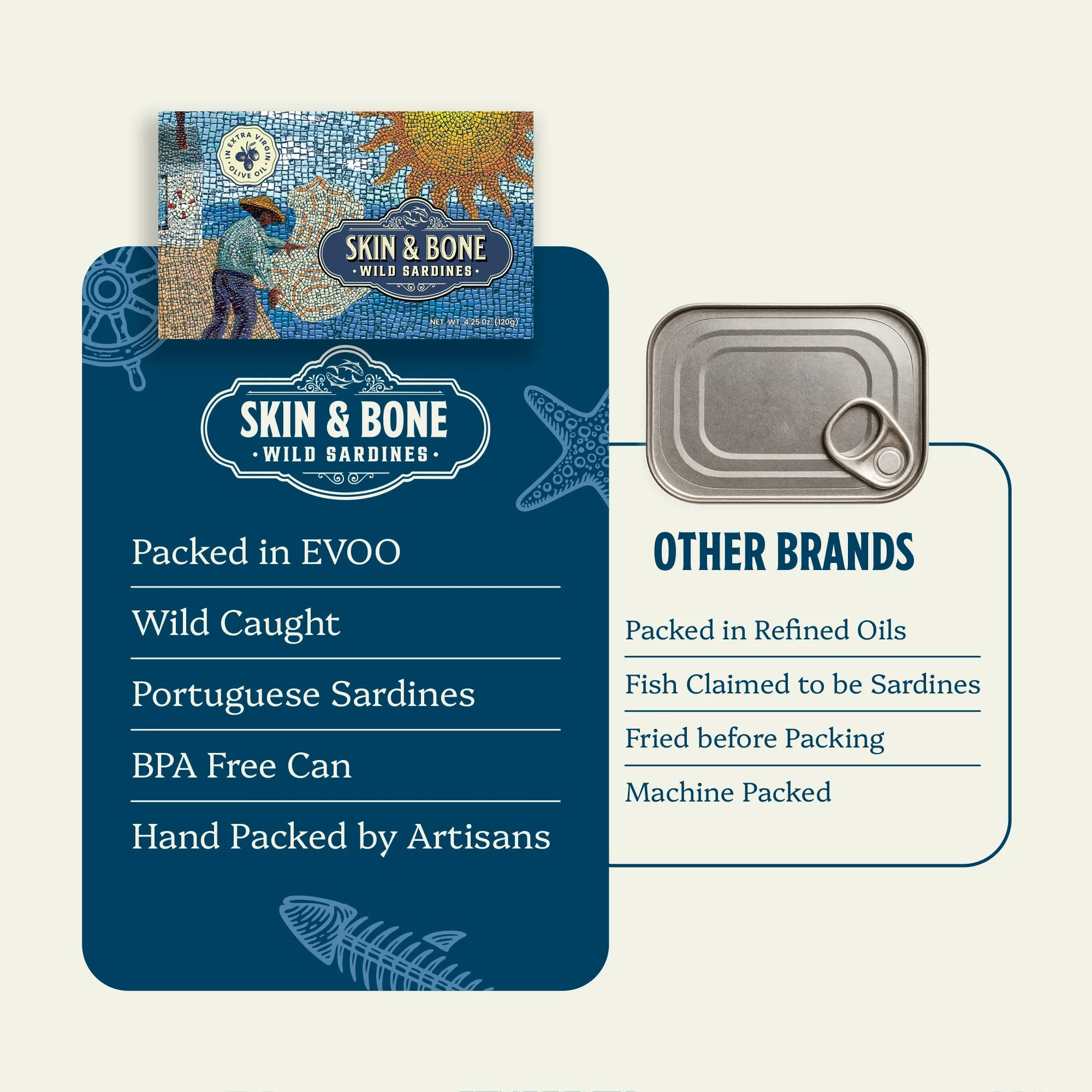
For specifics: it's Portuguese hand-packed wild-caught sardines, sold direct-to-consumer in two varieties (extra virgin olive oil and water). Three ingredients in the EVOO tin. 18g of protein. The fillets stay intact in the tin instead of mashing into paste, which is the visible difference between hand-packed and machine-packed. The flavor is mild, clean, not at all the bait-shop smell most people associate with grocery sardines.
My honest one-liner:
Best high-protein 90-second lunch I have on hand. I keep them stacked in the pantry next to the things I actually eat, not the things I bought once and forgot.
The Trade-Offs (Because Reviews Without Trade-Offs Are Marketing)
- Premium pricing. A 12-pack runs around $48, before subscription pricing. Per-tin you're well above grocery store. If your scoring rubric is "lowest dollar-per-tin," these lose.
- Online-only distribution. No retail shelf presence (yet). Plan your reorder cadence or run the subscription.
- Two-SKU lineup. EVOO and water. No tomato sauce, no smoked, no spicy. The minimalism is a feature, but if you wanted variety, you'll be pulling other brands in.
None of these have stopped me from reordering. They are real friction points that a thoughtful review should name. If you've read three other reviews of this product and none mentioned a downside, that's the gap I'm filling.
Part Two: The Case Study (For Builders)
Here's where the entrepreneur in me wants to lean in. Sardines are a saturated, low-margin, commodity-perceived category. The default assumption is that there's nothing left to do in canned fish. Skin and Bone is a small US brand quietly proving that wrong, and the playbook is worth studying. Five things they're doing right:
1. Product Quality You Can Defend in One Sentence
"Hand-packed in Portugal, three ingredients, wild caught." That's the entire pitch. Every word does work. Every word is verifiable on the back of the tin. There's no fluff, no superlatives, no story-of-the-founder-fishing-with-grandpa marketing. The product is the marketing. That's harder than it sounds and almost no one in this category does it.
2. A Two-SKU Lineup, On Purpose
Olive oil. Water. Done. Most early-stage food brands try to sprawl into eight flavors before they've nailed two. Skin and Bone is doing the opposite — pick a category, ship the canonical version, then ship the lighter version, and stop. Decision fatigue at checkout drops to zero. You don't end up scrolling. You add the EVOO 6-pack to cart.
3. Subscription as a Habit, Not a Discount
"The Tin Club" is named like a community, not a coupon. The subscription page reads like joining something instead of locking into a charge. That framing matters. Subscriptions are usually pitched as "save 15%" — theirs is pitched as "you eat these now, here's how to never run out." That's a better promise. It's also stickier.
4. Direct-to-Consumer With a Real Reason To Be DTC
A lot of brands go DTC because retail is hard. Skin and Bone goes DTC because the unit economics of premium tinned fish work better when you skip the grocery middleman, and because the customer who is willing to pay for premium tinned fish is the same customer comfortable buying it online. The channel matches the buyer. That's table stakes you'd think every brand gets right and most don't.
5. Affiliate Program (And Why It Matters)
Full transparency: I'm in their affiliate program. The reason I joined isn't the commission — it's that they built a clean affiliate path through GoAffPro for people who were already telling friends about the product. Word-of-mouth was happening anyway. Smart small brands give that organic energy a track to run on. Big brands spend millions building the same thing through paid acquisition and never get the trust component.
If you're building a product, copy that posture. The cheapest, highest-trust customer acquisition you'll ever have is the customer you've already won, recommending you to a friend. Make it easy for them.
The Verdict
Buy if:
You want a real-food, no-cooking, high-protein lunch on demand. You've written off sardines based on the grocery-store version. You appreciate small brands that ship the canonical version of one thing.
Skip if:
Your only metric is dollars-per-tin, or you only buy canned goods you can grab on the way home from work.
For most of the people Googling "is Skin and Bone worth it," the answer is yes — and the 6-pack of EVOO is the right entry point. Order from skinandboneus.com here and use code CALEB at checkout for 10% off your order. (Affiliate link — we get a small commission, you pay the same price.)
The Real Takeaway
The product is good. That part is easy. The harder lesson is what happens when a small brand picks a saturated category, ships the cleanest version of one thing, and lets satisfied customers carry the marketing. You don't need a venture round to do this. You need a defensible product, a tight SKU list, and the discipline not to chase every flavor extension your distributor will ask you for.
I'm watching them. If you're a builder reading this, you should too.
Building Something Yourself?
If you're an entrepreneur trying to figure out how to win in a "saturated" category, the lessons in this tin apply broadly. The McGennis Family blog is where I write about building, faith, and the work of doing hard things well — come read more, and tell me what small brand you think is worth studying next.
Affiliate disclosure: this post links to Skin and Bone via our affiliate code. We earn a small commission on orders. The review reflects nine months of paid-out-of-our-own-pocket purchases.
Join the Conversation