Pork and chive dumplings, hand-folded one at a time, steamed in a bamboo basket and dipped in homemade chili oil. This week's From Scratch Friday took us back to Hong Kong Market for fresh chives and dumpling wrappers, then turned our kitchen counter into a tiny dumpling factory with Leo, Rapphie, Stephanie, and me all pinching pleats together.
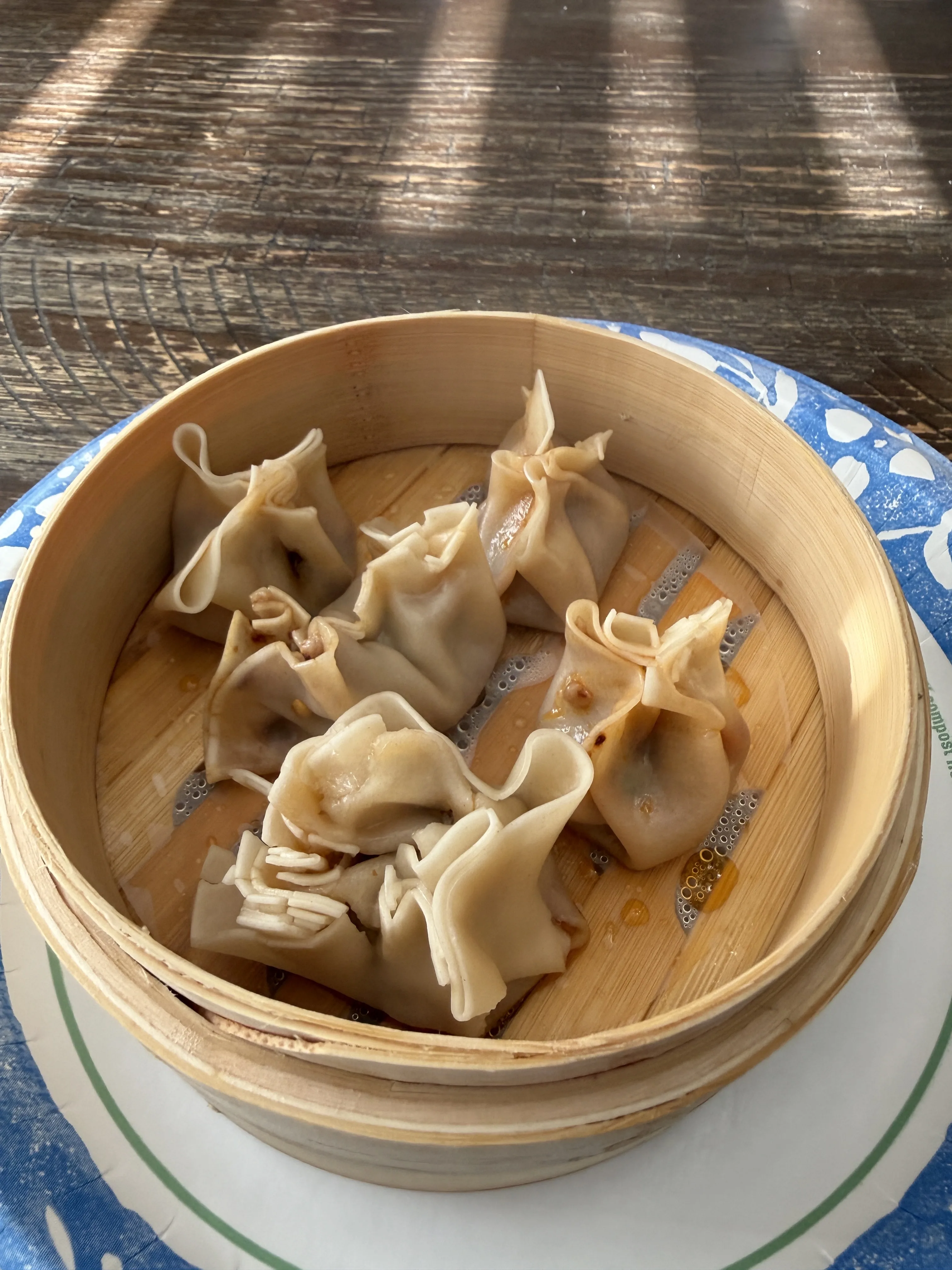
Steamed pork and chive dumplings, fresh out of the bamboo basket
Back to Hong Kong Market
After Week 3's pho-and-sushi run, Hong Kong Market in Columbia, Missouri has officially become our go-to. This time we were after Chinese chives (the flat, garlic-scented kind), good dumpling wrappers, fresh ginger, and a jar of chili crisp for the dipping sauce. Stephanie loaded up the cart, Leo asked questions about every single thing on every single shelf, and Rapphie hung out for the ride.

Hong Kong Market in Columbia, Missouri — our happy place for from-scratch Asian cooking
Prepping the Chives (Don't Skip This)
If there's one place beginners go wrong with dumplings, it's the chives. The rule: wash them, dry them completely, and don't add salt anywhere near them until the very end. Salt pulls water out, and watery filling means broken dumplings.
We washed a big bunch, blotted them dry on paper towels, then chopped them into pieces about half a centimeter long. That's it. Set them aside and forget about them until the pork is ready.
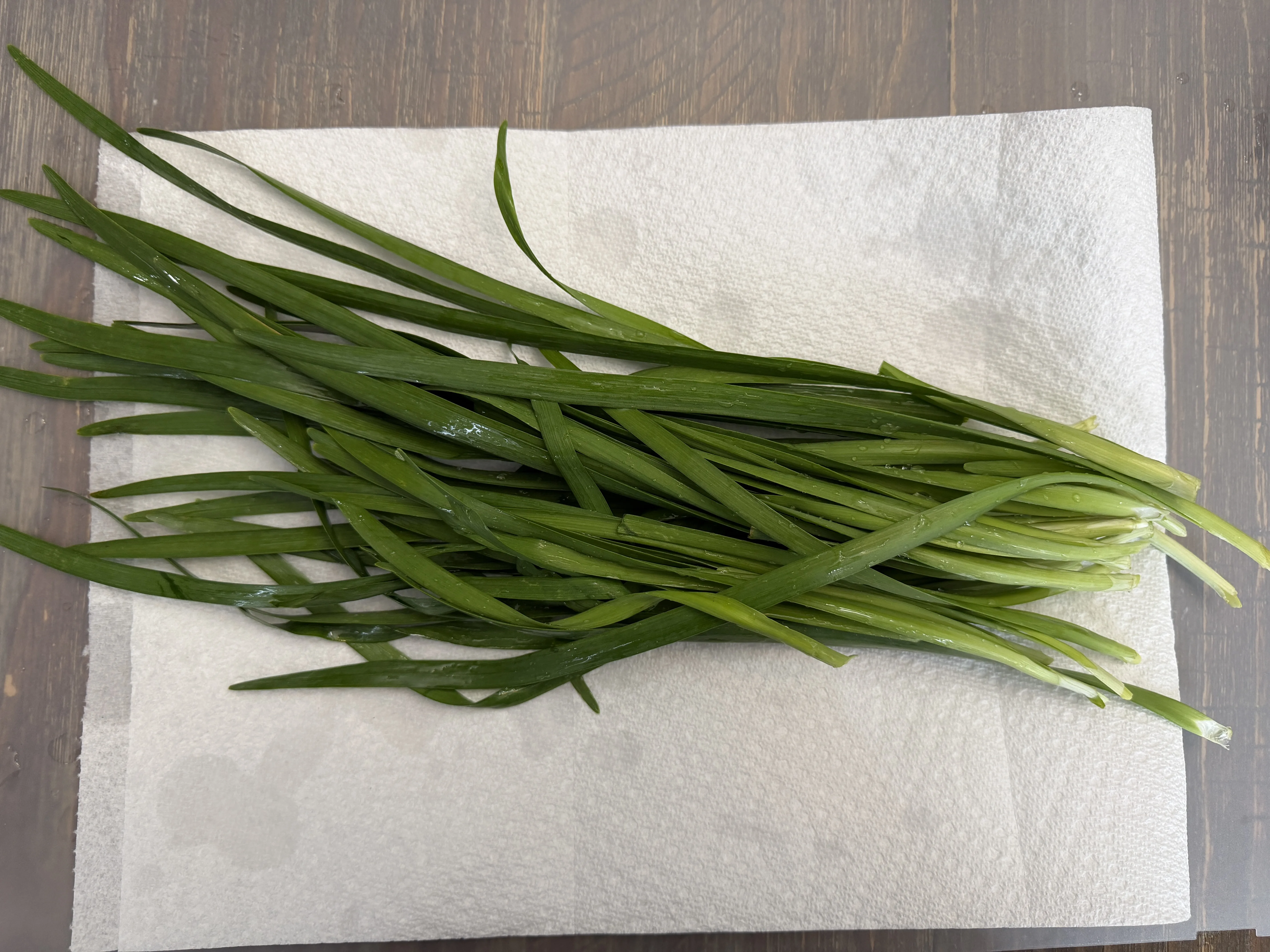
Washed and fully drained — the most important step
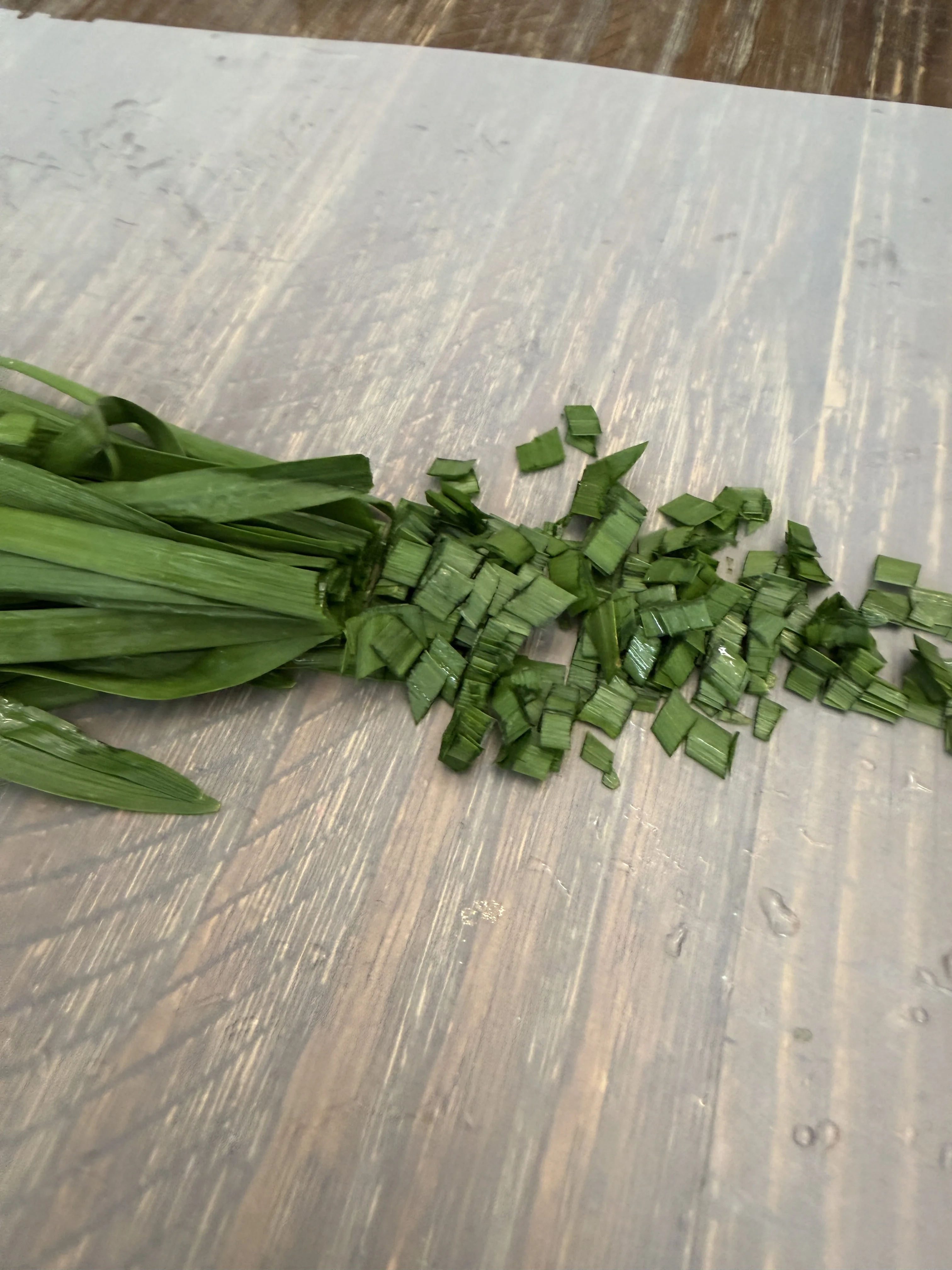
Chopping into half-centimeter pieces
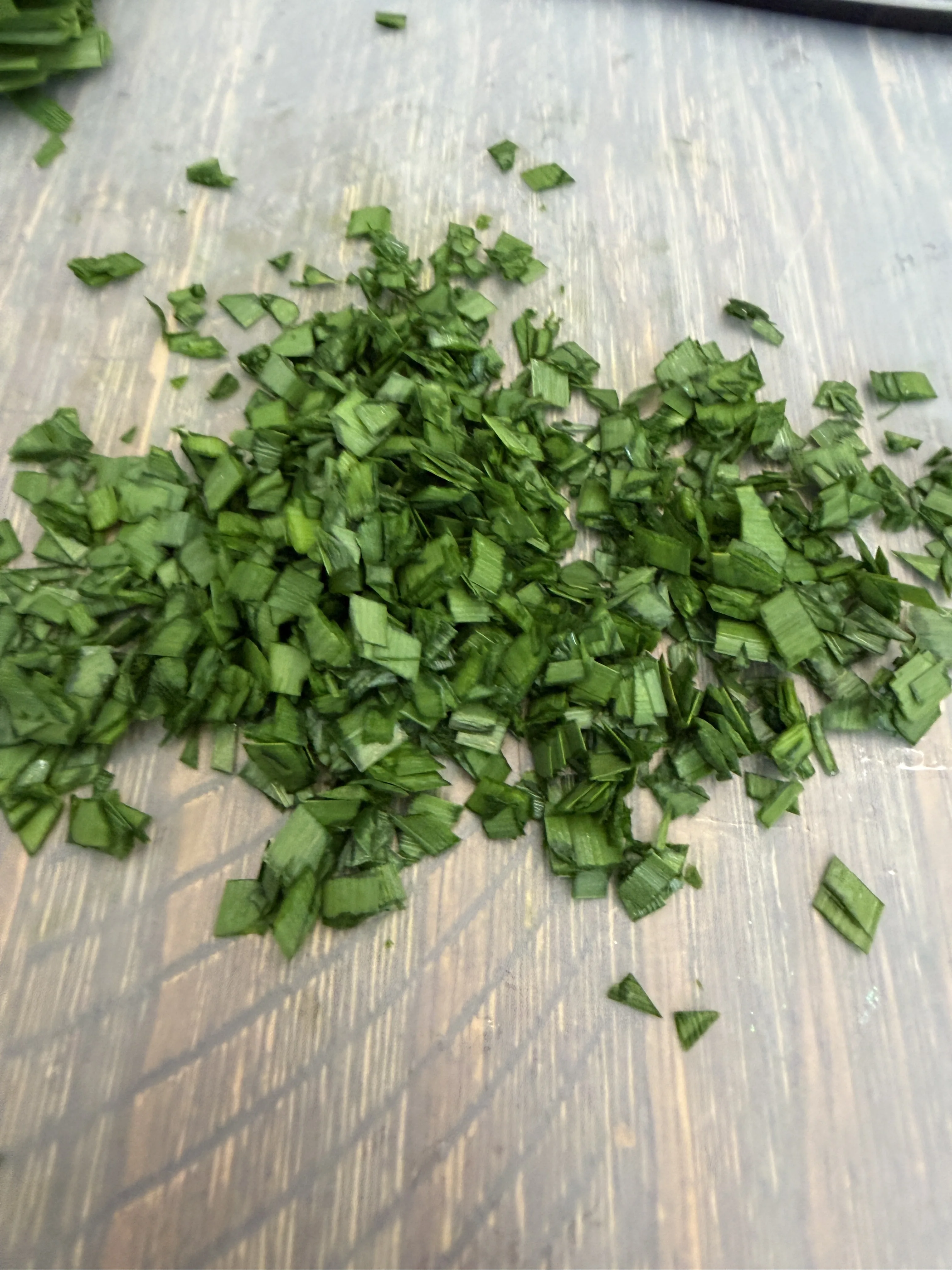
Ready to fold into the pork at the last second
Ginger, Soy, and the Pork Filling
Fresh ginger gets peeled with the edge of a spoon (way easier than a knife), then minced as fine as we could get it. A teaspoon is plenty — the goal is warmth, not a ginger punch in the mouth.
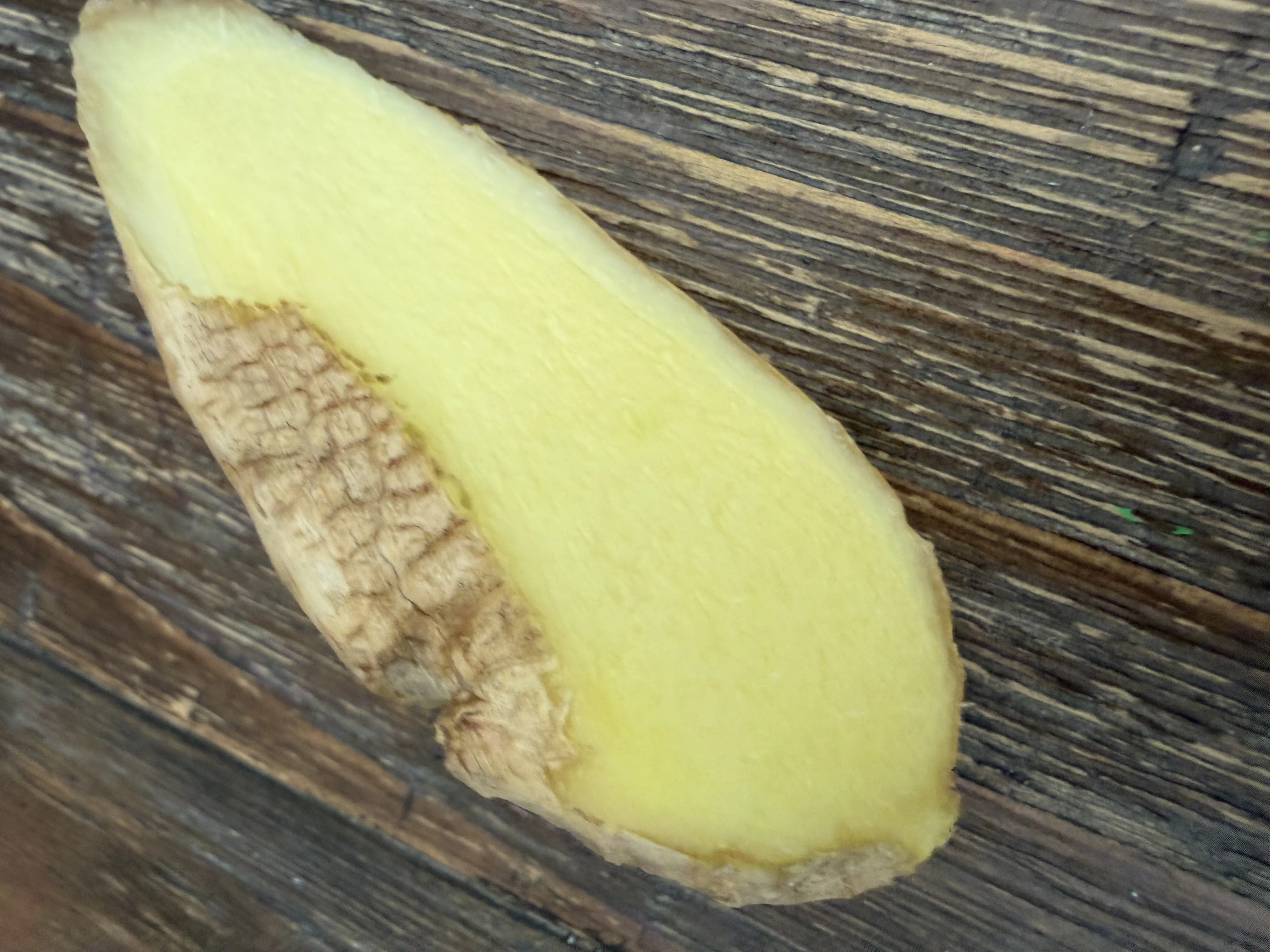
Peeled fresh ginger
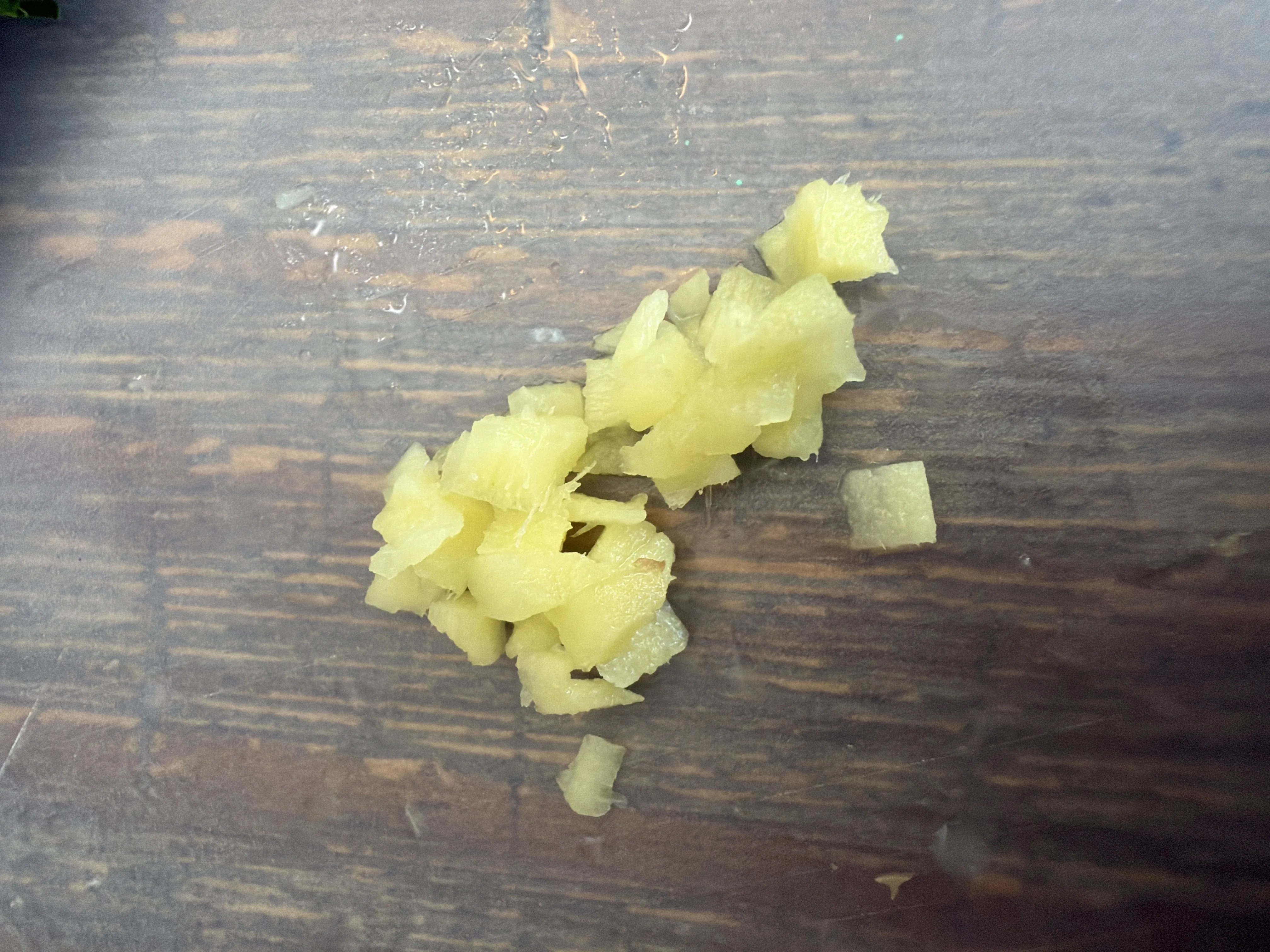
Minced fine for the pork filling
Then the pork. We used 70/30 ground pork — you want the fat. Lean pork makes dry, tough dumplings every time. Into the bowl: light soy sauce, a touch of dark soy for color, oyster sauce, white pepper, and the minced ginger. Then the part that actually changes the dumpling: the water.
Stir the pork in one direction until it's combined, then add water (or scallion-ginger water) a tablespoon at a time, stirring after each addition. Keep going until the meat looks sticky, glossy, and almost springy. That's what gives steamed dumplings their juicy bite. Sesame oil goes in last. Salt does not go in yet.
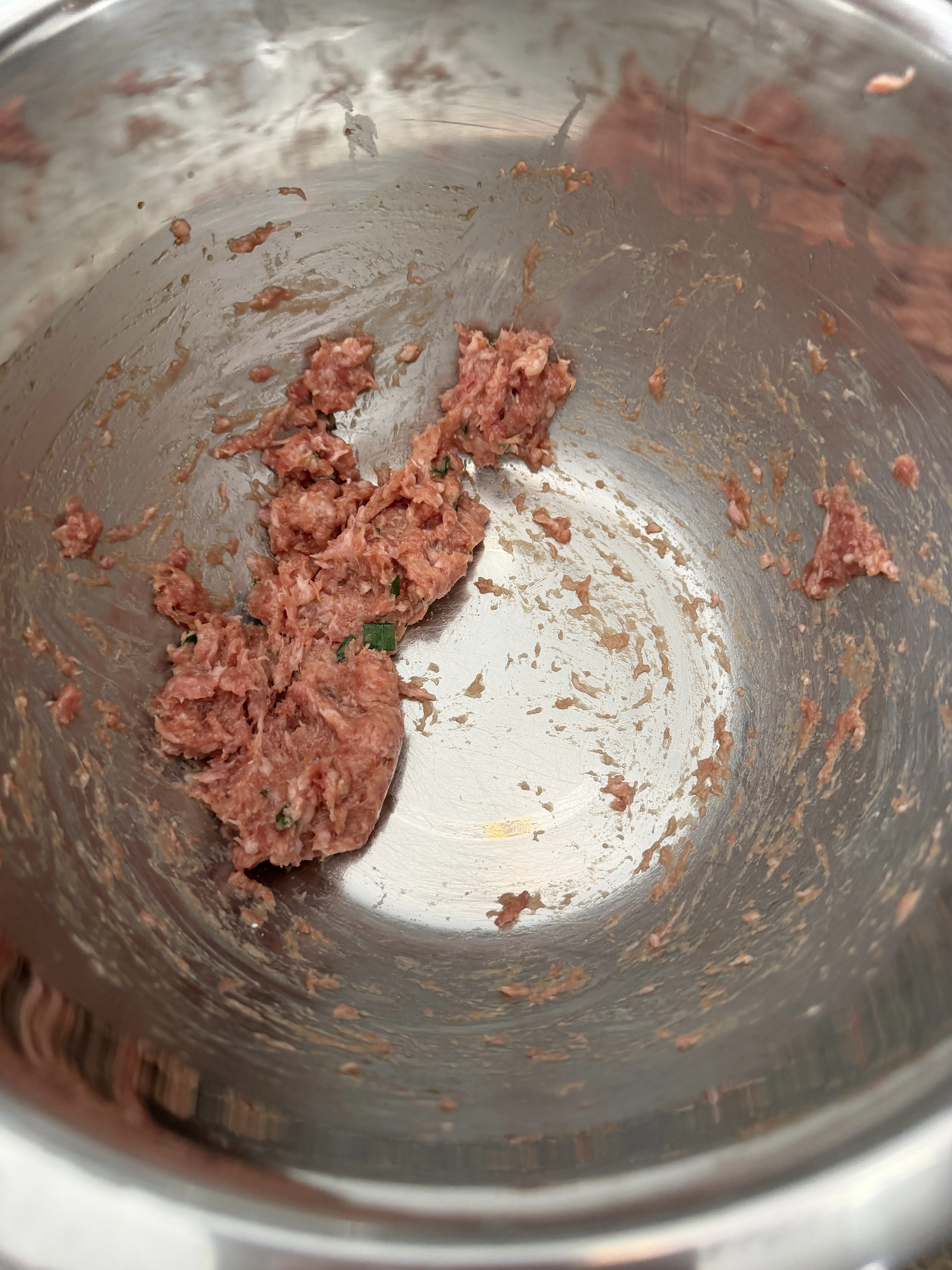
Pork beaten in one direction with water added a tablespoon at a time
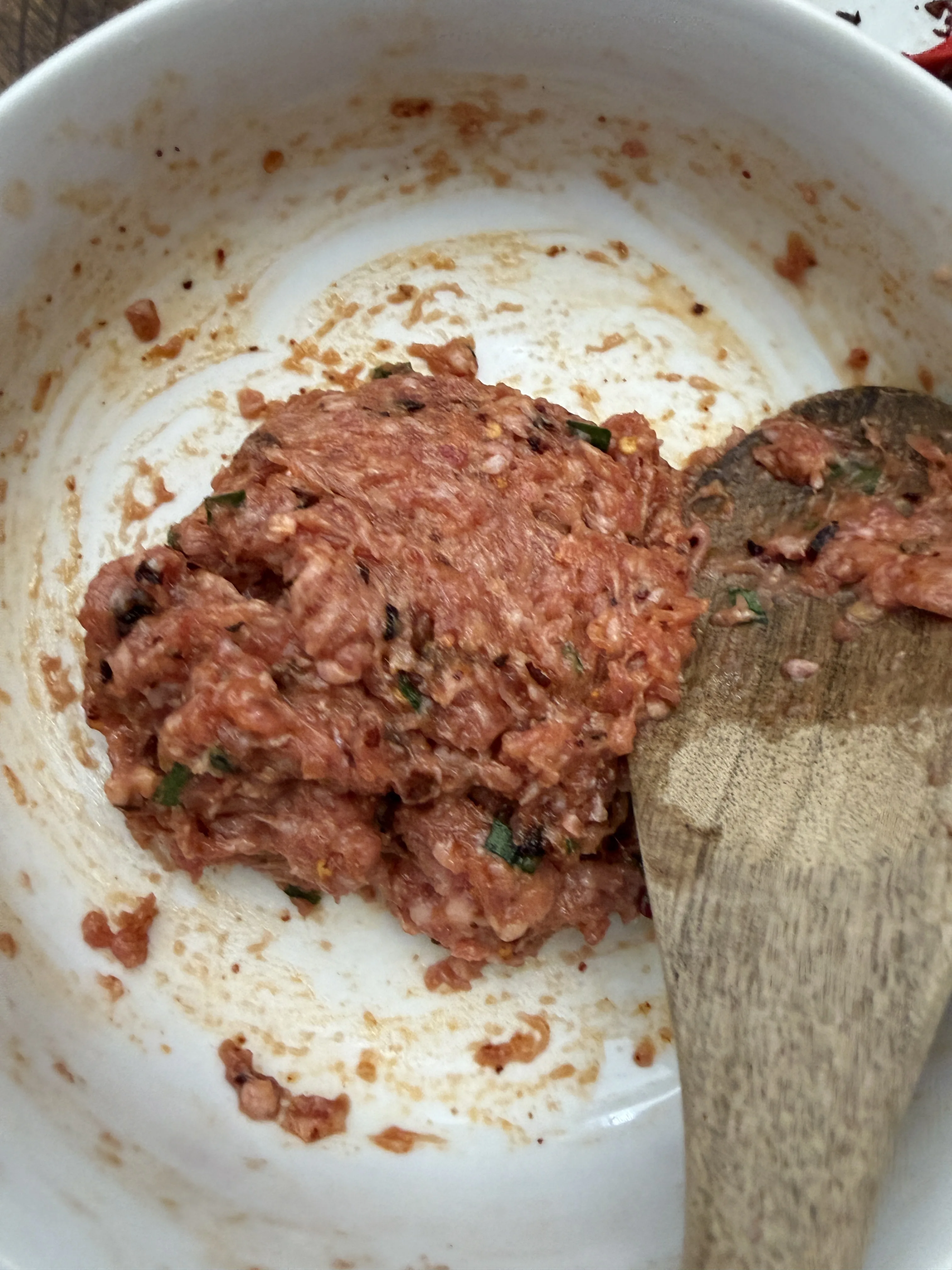
Chives folded in at the very end — salt added right before wrapping
Once the pork is glossy and sticky, fold in the chopped chives, salt to taste, mix gently — and then start wrapping. The longer mixed filling sits, the more water the chives release, so we move fast.
Wrapping with the Boys
This is where it stopped being cooking and started being family time. Stephanie laid out the wrappers, I worked the pleating, and Leo took the very serious job of spooning filling into the centers. He took it seriously. Very seriously.
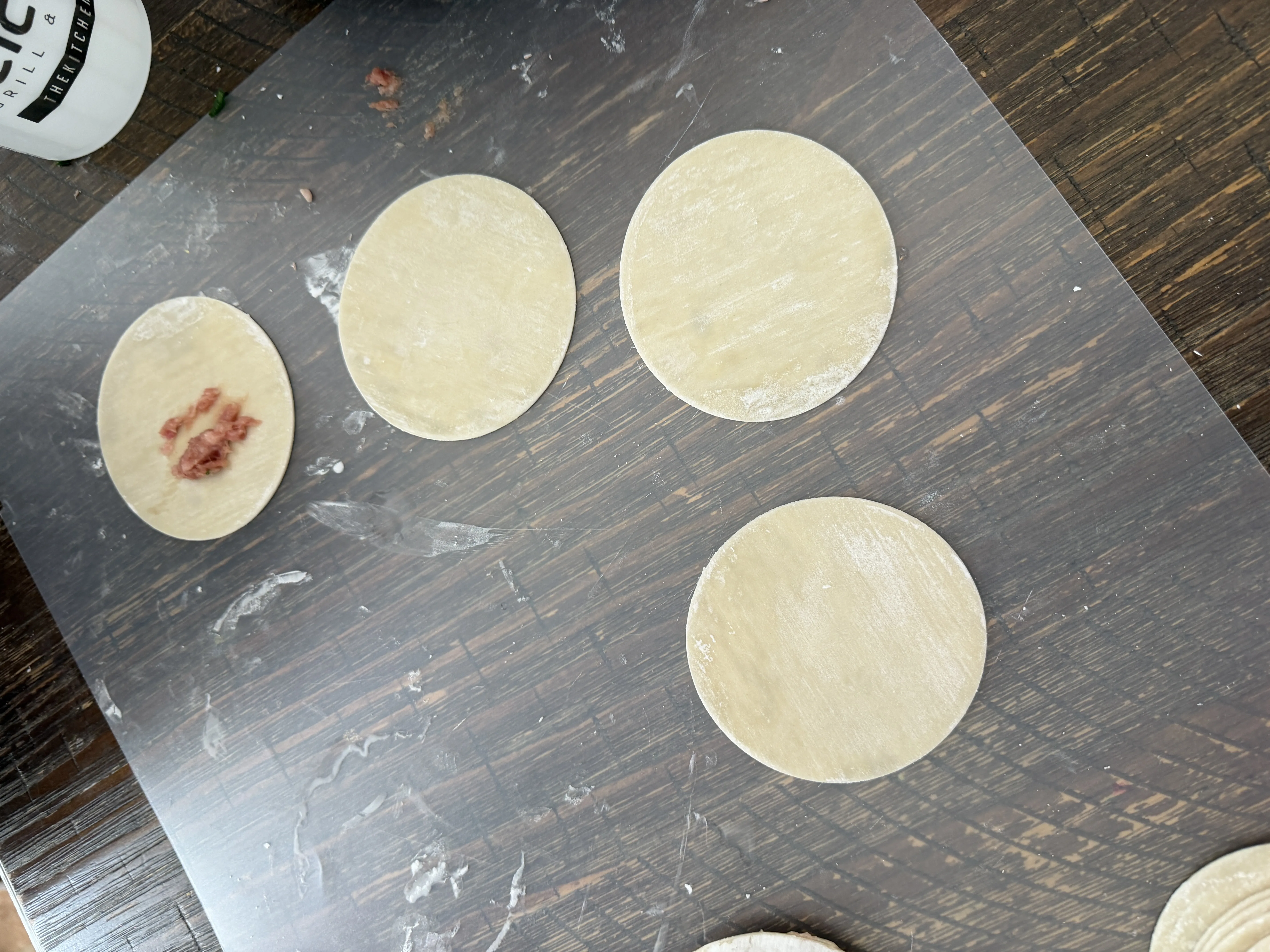
Store-bought wrappers, laid out and ready to fill
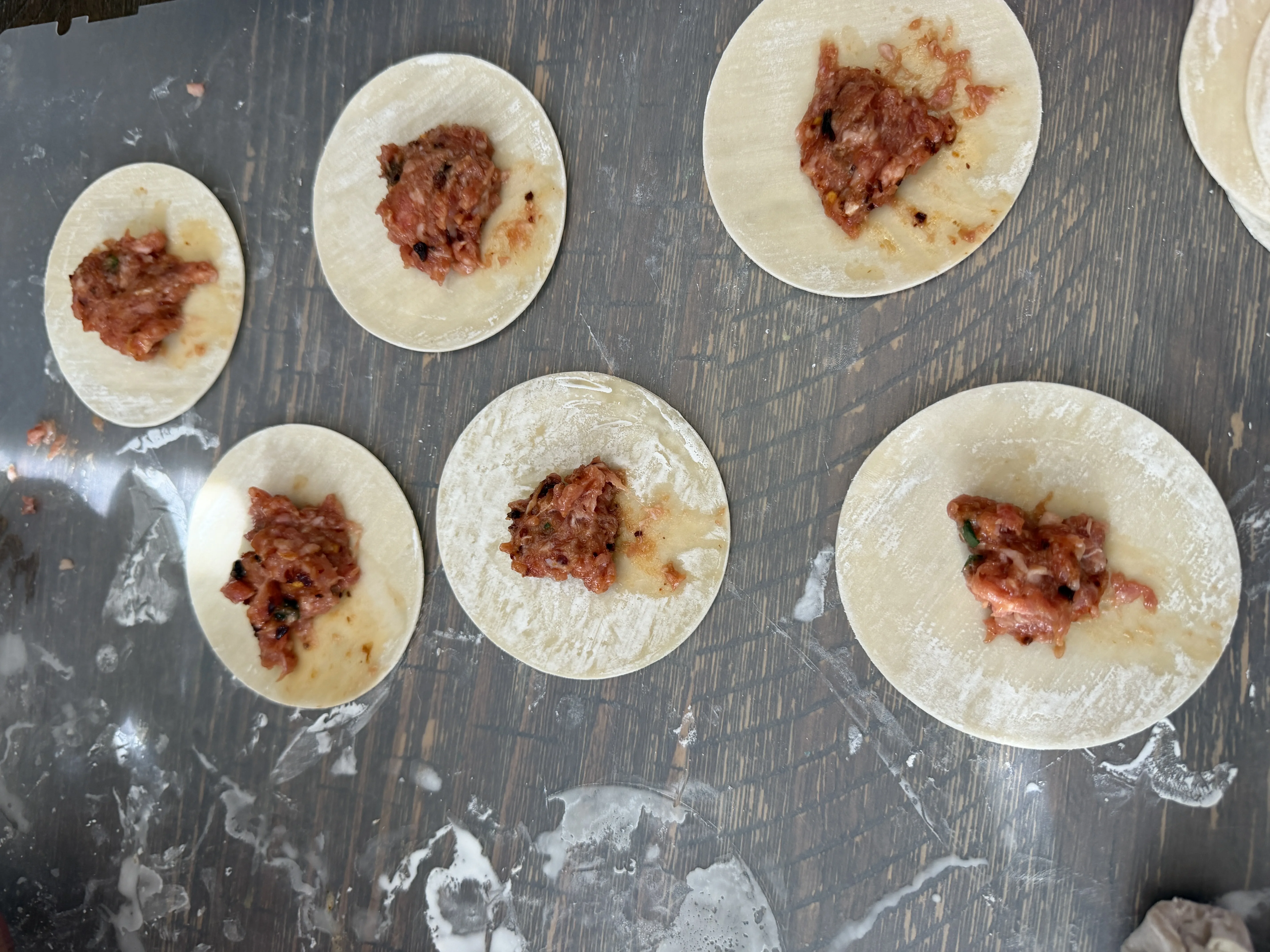
A spoonful in the middle — don't overfill
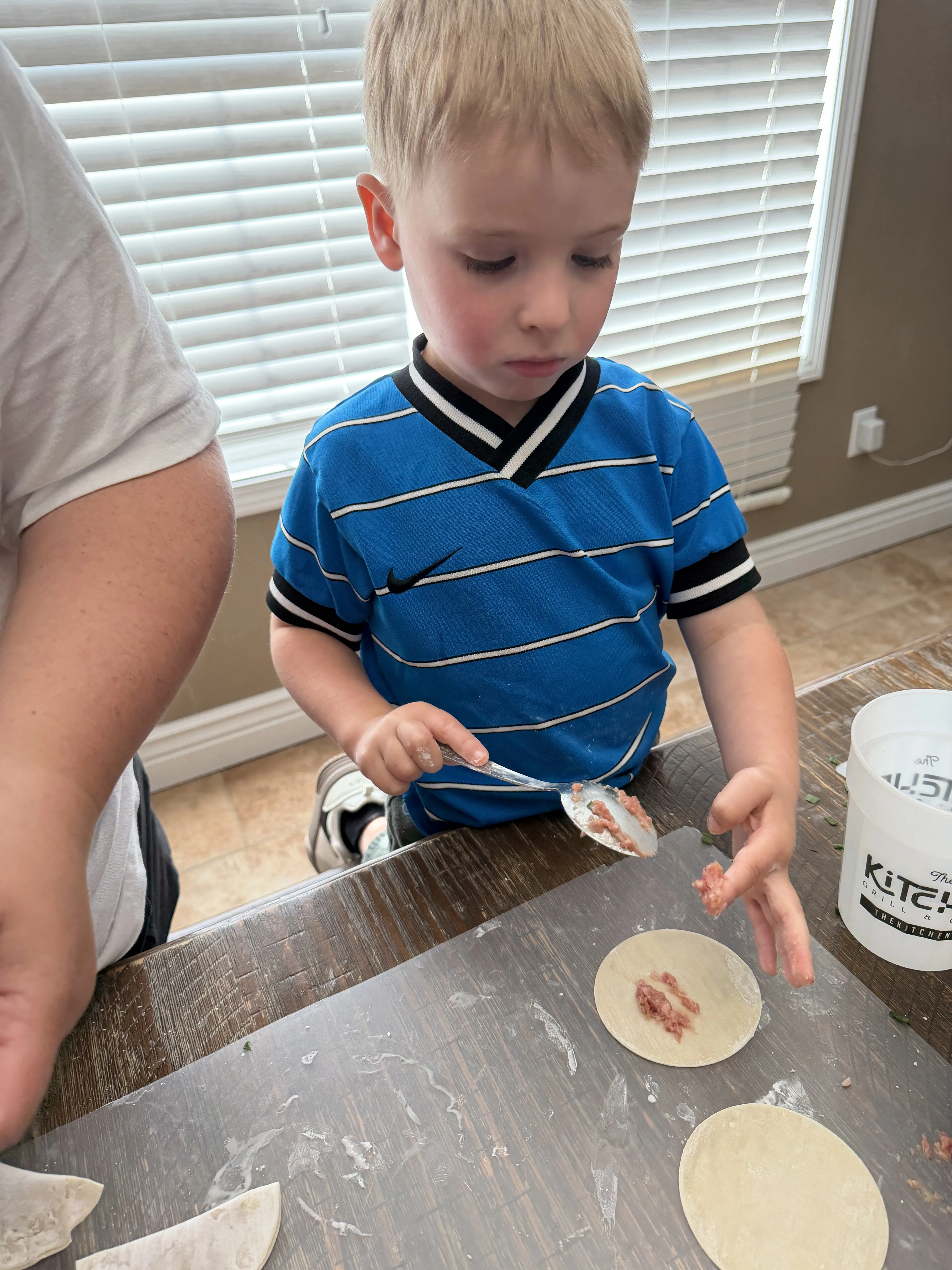
Leo on filling duty — the most important job in the kitchen
The technique is simple: a spoon of filling in the middle, dab water around the edge of the wrapper with a finger, fold in half, and pinch the edges to seal. For a beginner, the half-moon is perfect. If you want to get fancy, pleat one side as you pinch — we ended up with a mix of both.
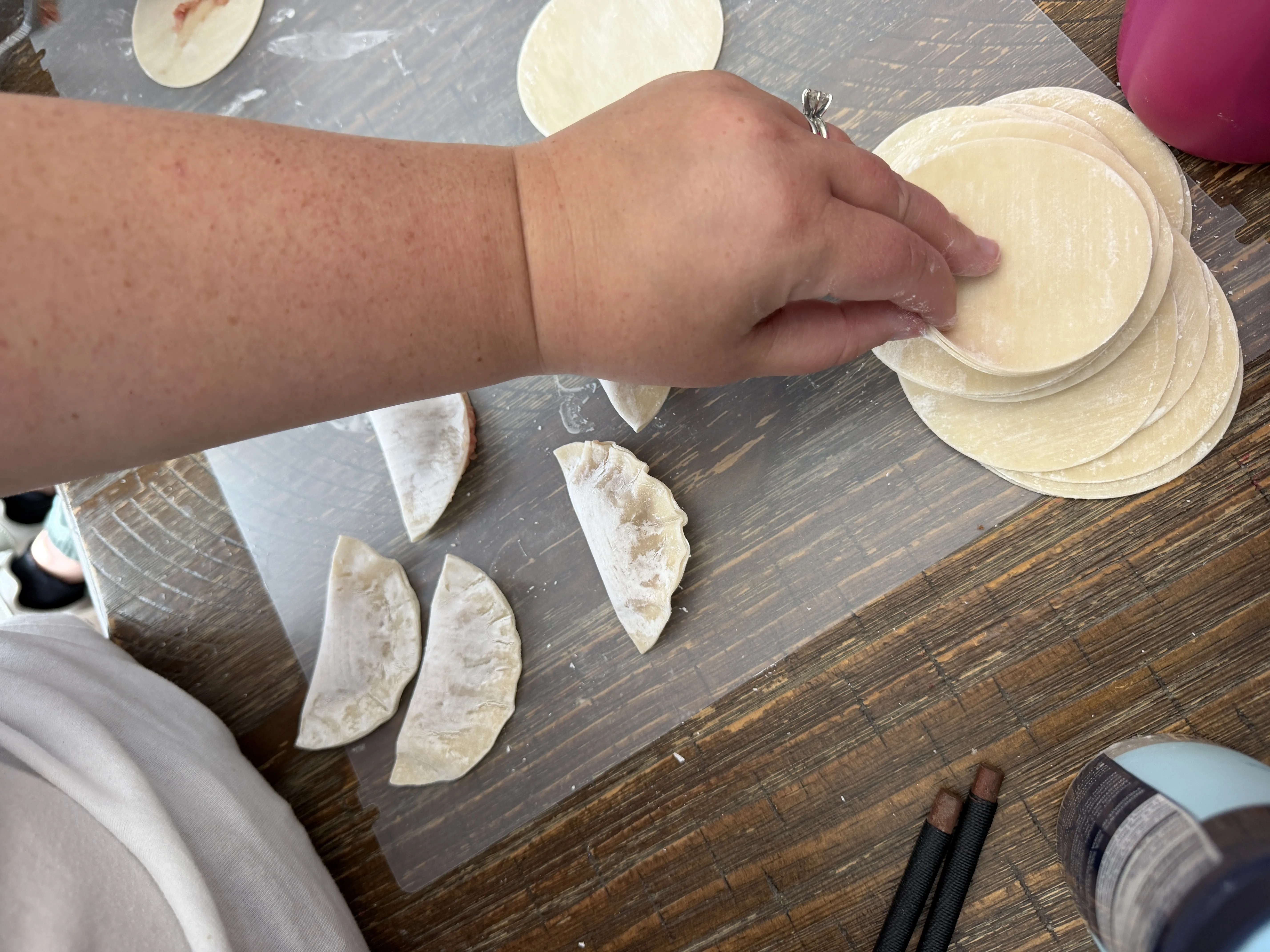
Half-moon fold — the beginner-friendly shape
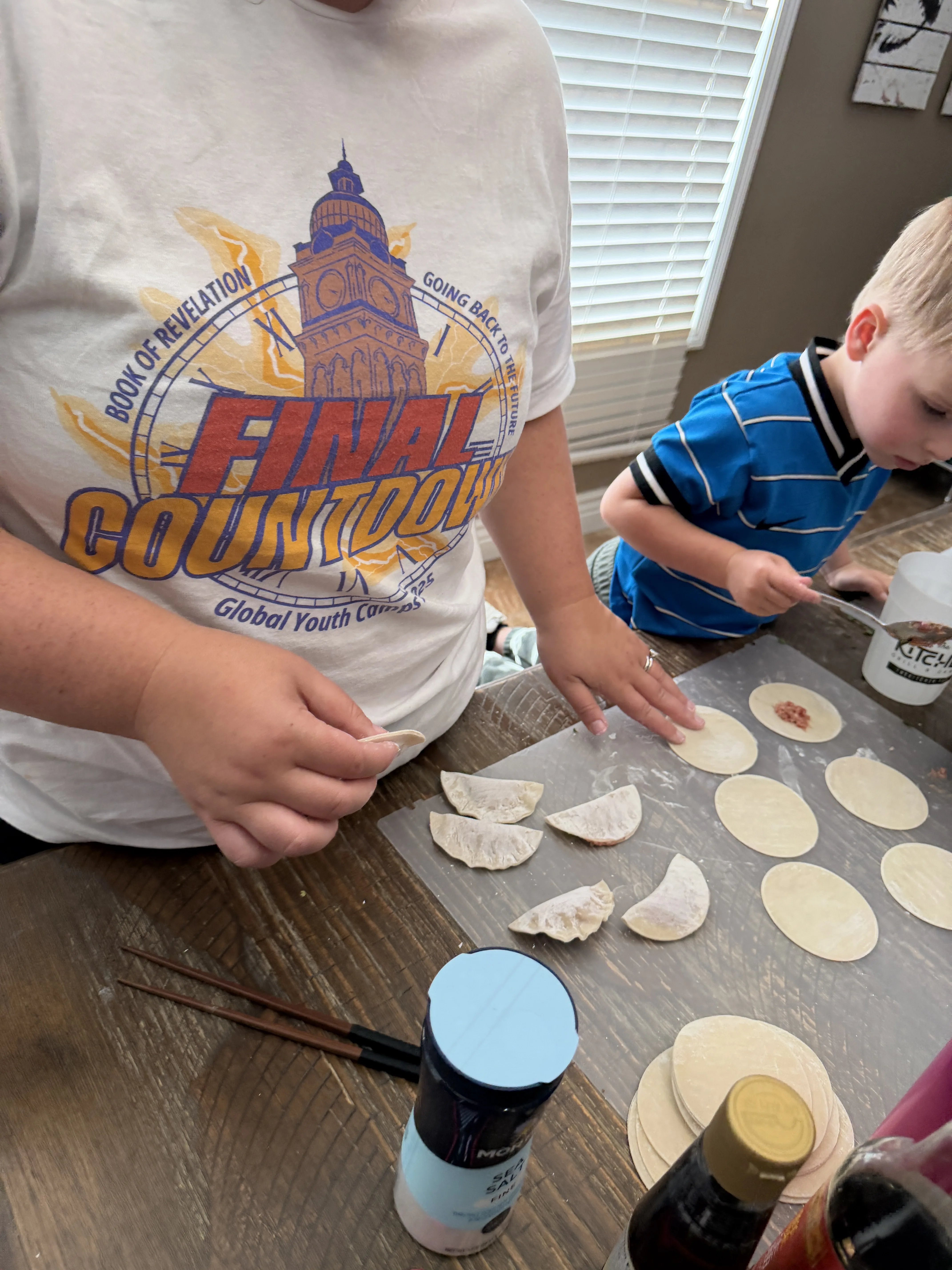
Everybody on dumpling duty
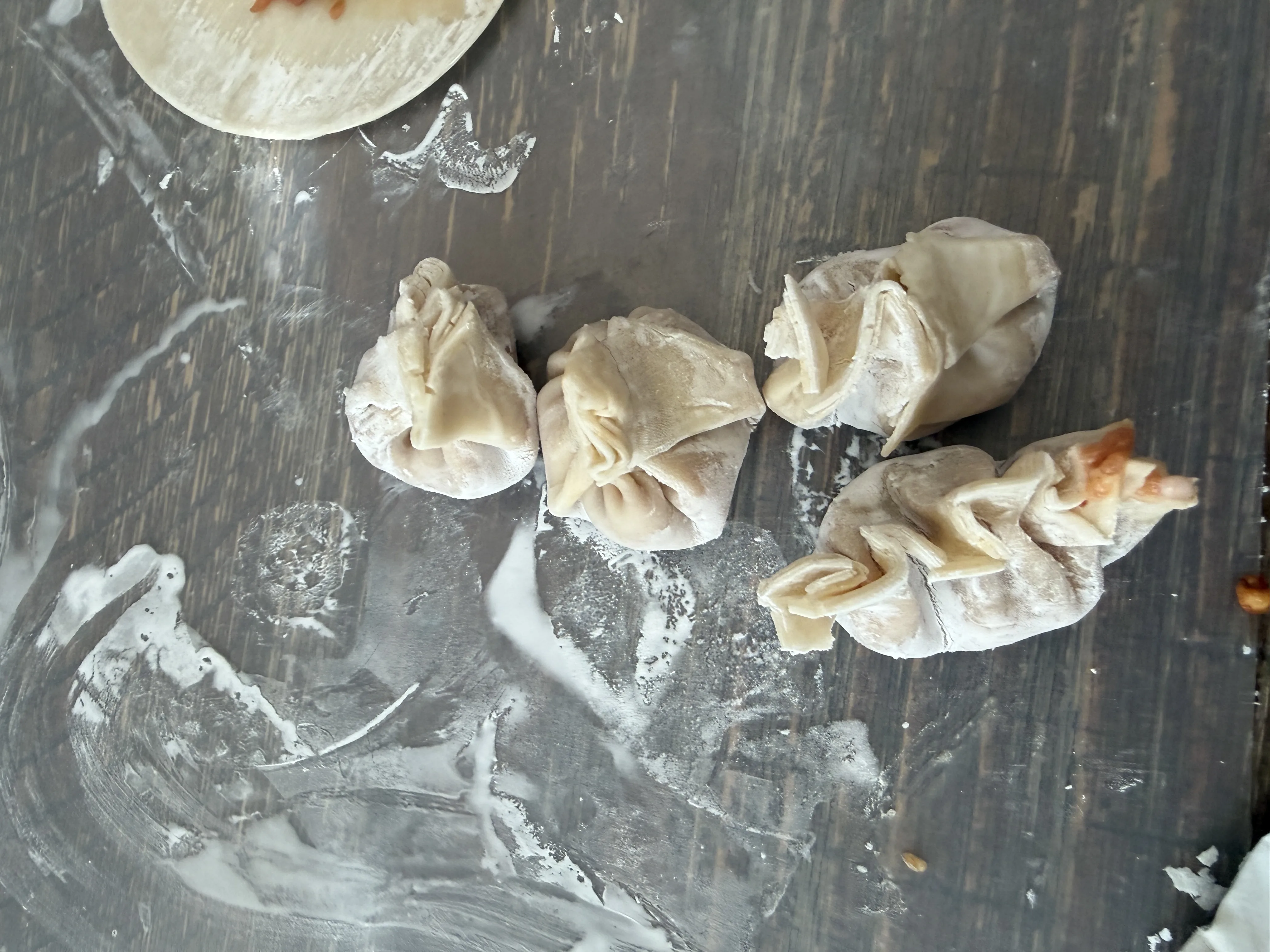
A row of pleated dumplings — somewhere between rustic and respectable
Into the Bamboo Steamer
Bamboo steamer over a pot of boiling water. Line the basket with parchment (or a cabbage leaf in a pinch), arrange the dumplings so they don't touch, lid on, and steam for about ten minutes. The wrappers go from cloudy white to glossy and translucent — that's how you know they're done.
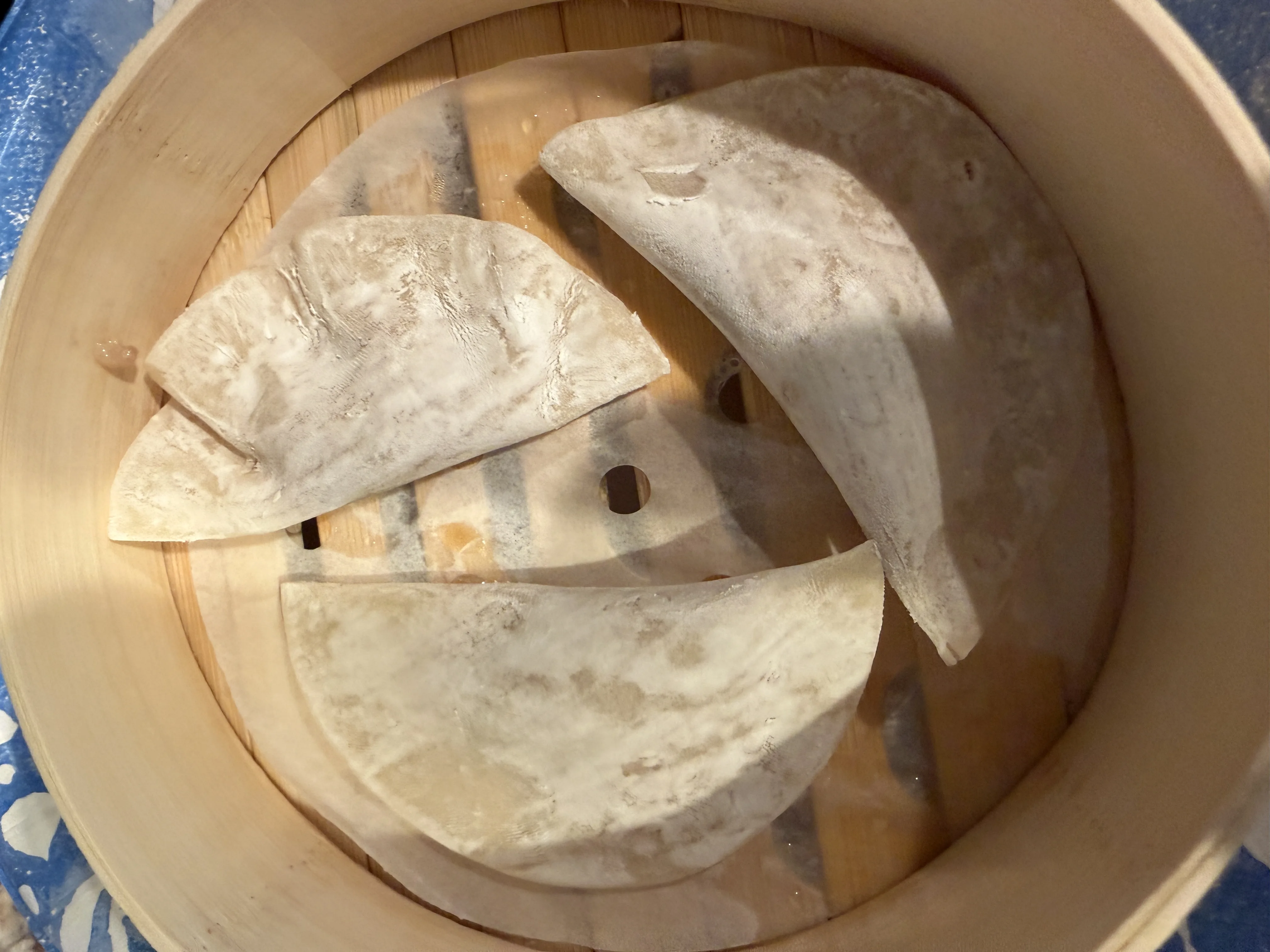
Loaded up and ready for the steam
The Chili Oil Dipping Sauce
This is the part that takes a good dumpling and makes it a great one. The base is Lao Gan Ma Spicy Chili Crisp — the iconic Chinese chili oil that's basically the gold standard. We added a splash of black vinegar, a little soy, and a few drops of sesame oil right in the jar. That's it. No measuring, just taste as you go.
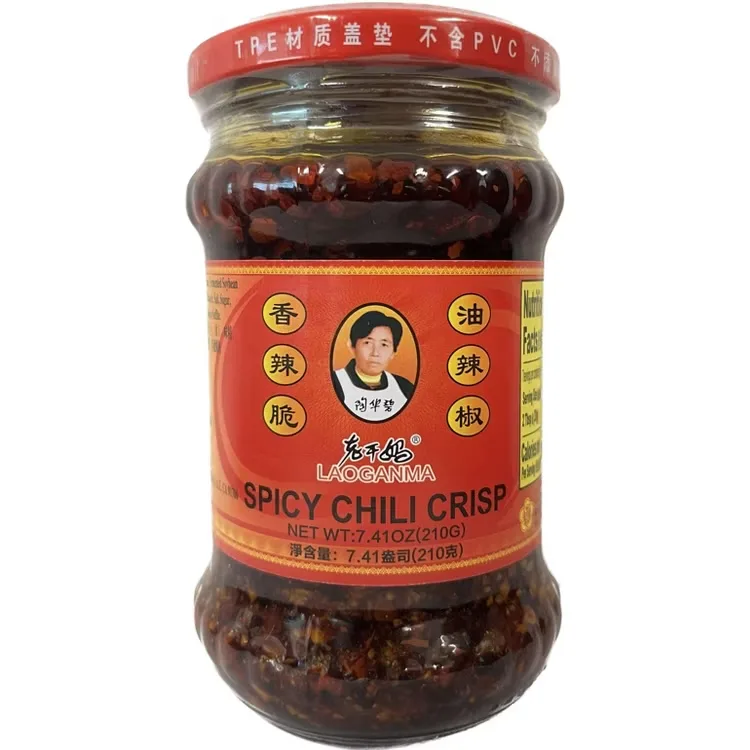
Lao Gan Ma Spicy Chili Crisp — the base
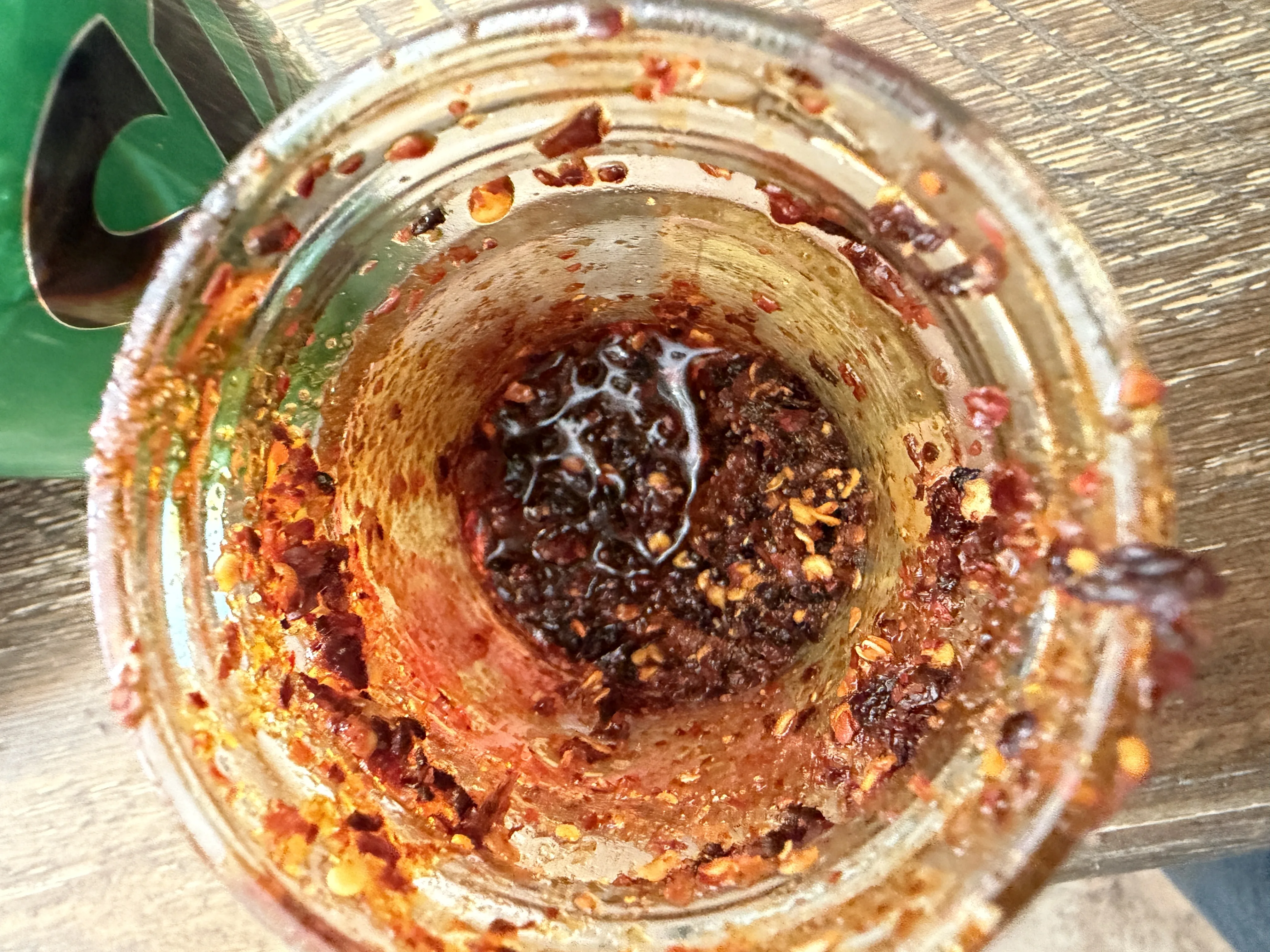
Plus black vinegar, soy, and sesame oil — the dumpling's best friend
Eating
First bite is always a careful one — pork dumplings hold their heat. We piled them on a plate, dunked them in chili oil, and that was the rest of the night. Leo ate his with a fork (and a lot of supervision). Stephanie and I went straight chopsticks — the Masu black walnut pair we've been using since week one. Rapphie mostly cheered from his bouncer.
Use code THEMCGENNISFAMILY for 15% off
Apply at checkout on masuhome.com — works on the chopsticks above and anything else in their shop. Affiliate link: we earn a small commission at no extra cost to you.
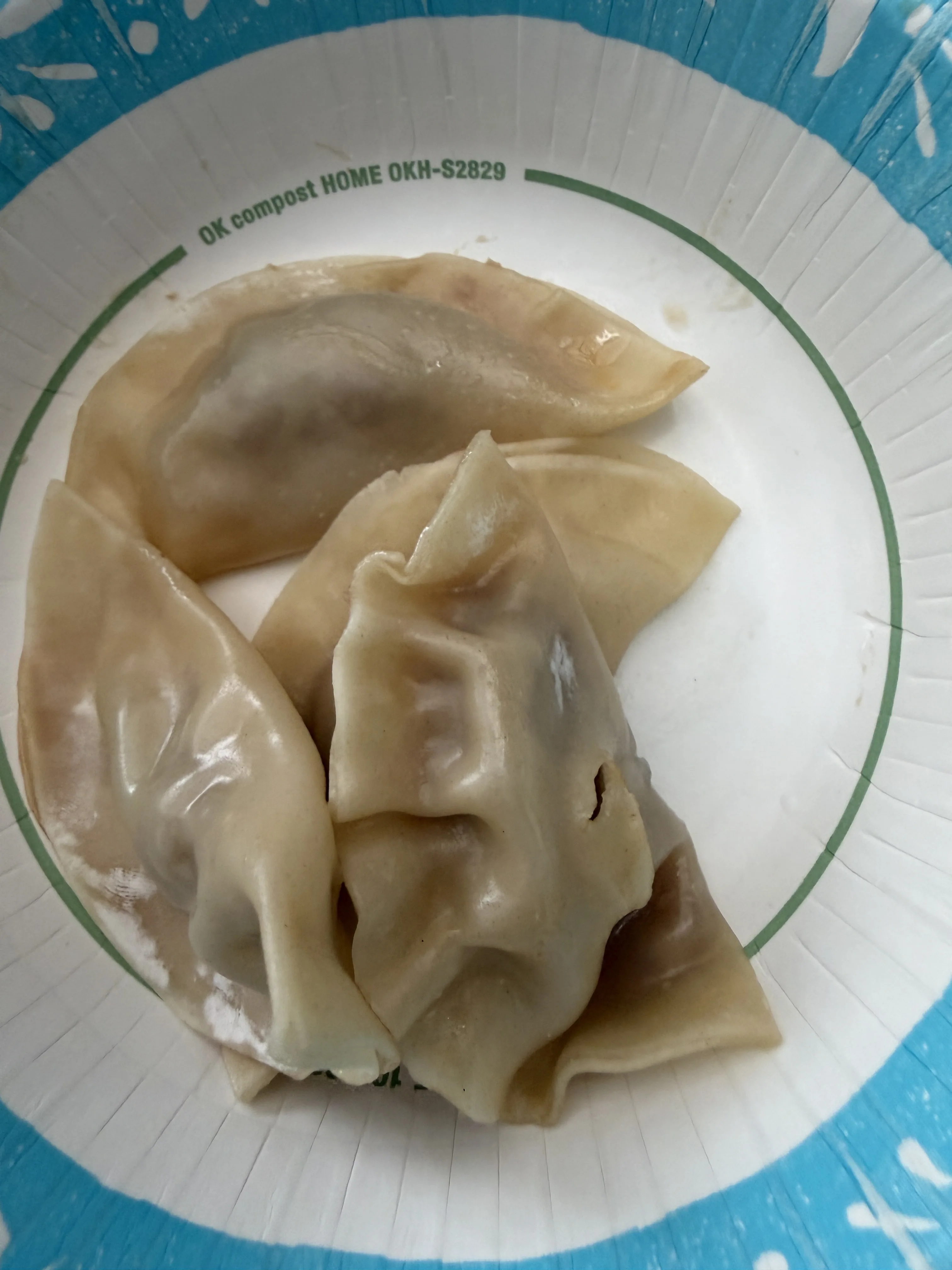
Steamed and plated
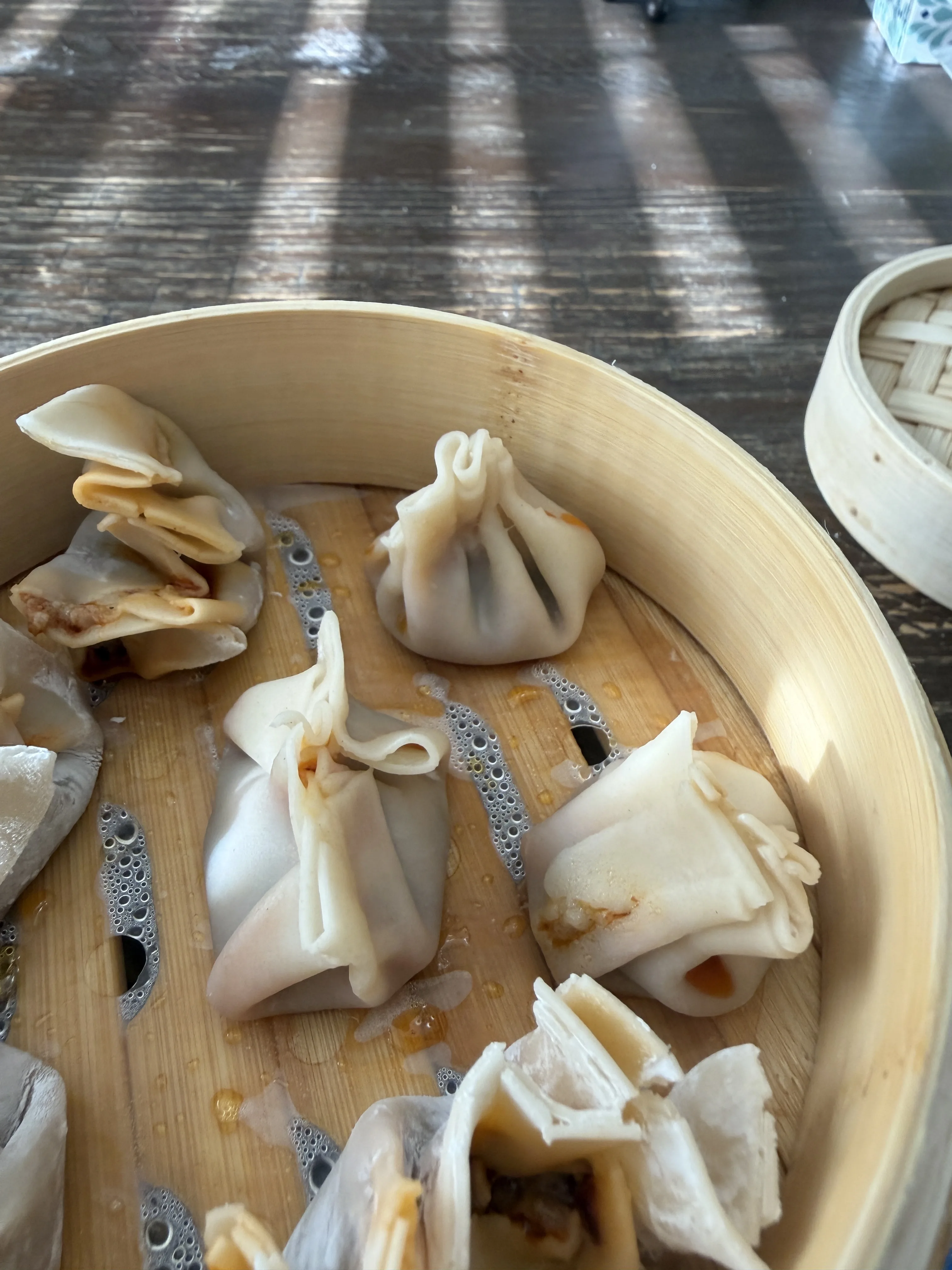
Glossy wrappers — that's how you know they're done
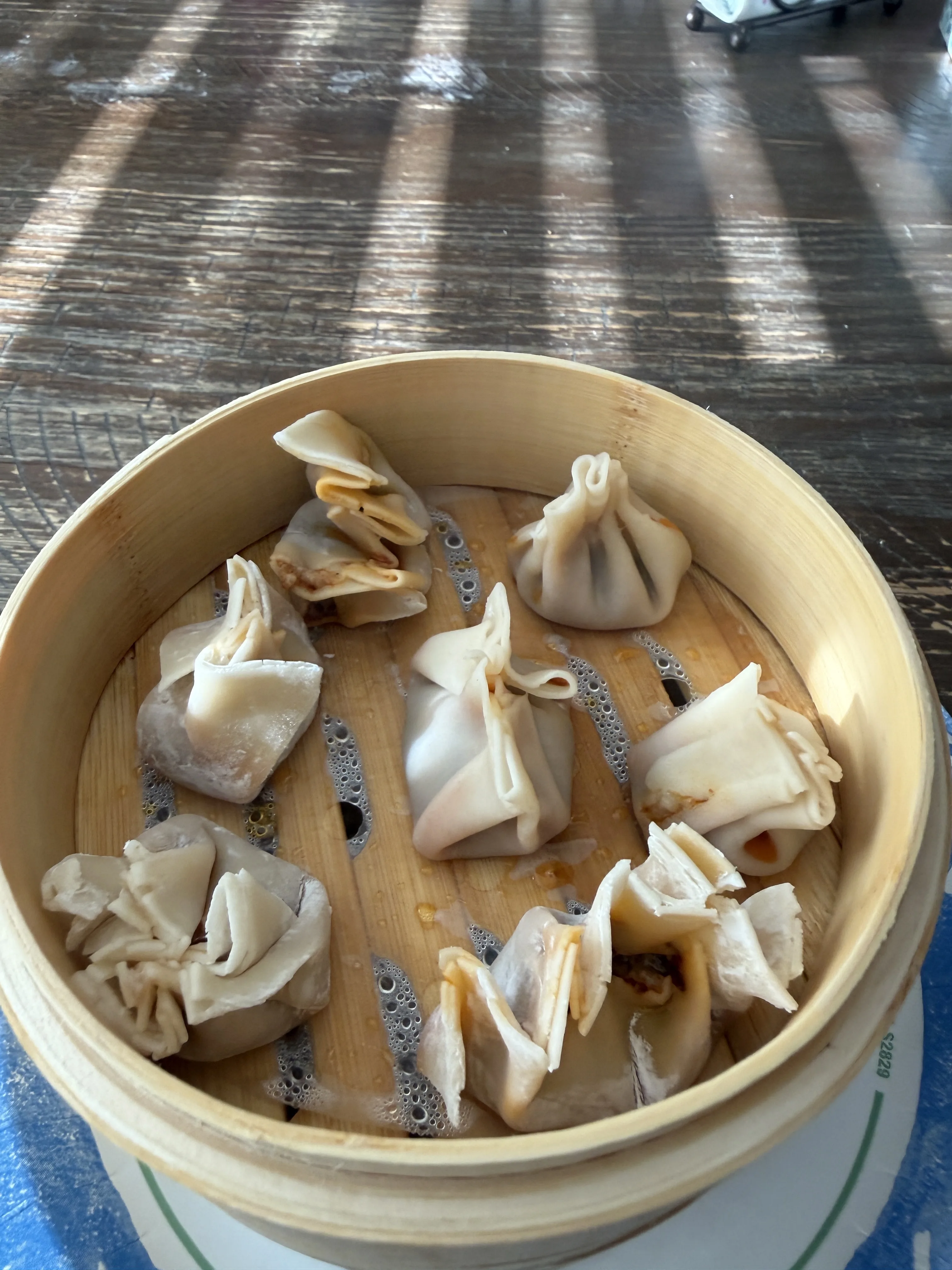
A whole steamer of dumplings, gone in about fifteen minutes
What We Learned This Week
- Dry chives, dry chives, dry chives. Most dumpling problems start with watery filling. Drain them completely and don't salt them early.
- Stir the pork in one direction. It feels weird, but it's what builds the springy, juicy texture. Don't switch directions and don't rush the water.
- Salt goes in last. Salt early and you'll pull water out of the meat and chives both. Add it right before wrapping.
- Wrapping is a family activity. One person filling, one person folding, one person on the steamer — this is exactly the kind of meal that gets better the more hands are in it.
From Scratch Friday Week 4 in the Books
Steamed pork and chive dumplings, hand-folded by the four of us, dipped in homemade chili oil. Cheap, fun, and probably the most kid-involved Friday we've done yet.
Got a dumpling shape you love or a dipping sauce we should try? Drop it in the comments — we're always looking for the next one.
Join the Conversation