A traditional seafood boil goes in a pot. Everything gets dumped in water, everything comes out at once, and everything tastes like the same seasoned water. I love a boil. But I wanted the flavor of a boil with the crust you only get off a hot flat surface — so the whole thing went on the Blackstone instead. Snow crab, lobster tails, salmon, shrimp, andouille, whole garlic, and more lemon than anyone thought was reasonable.
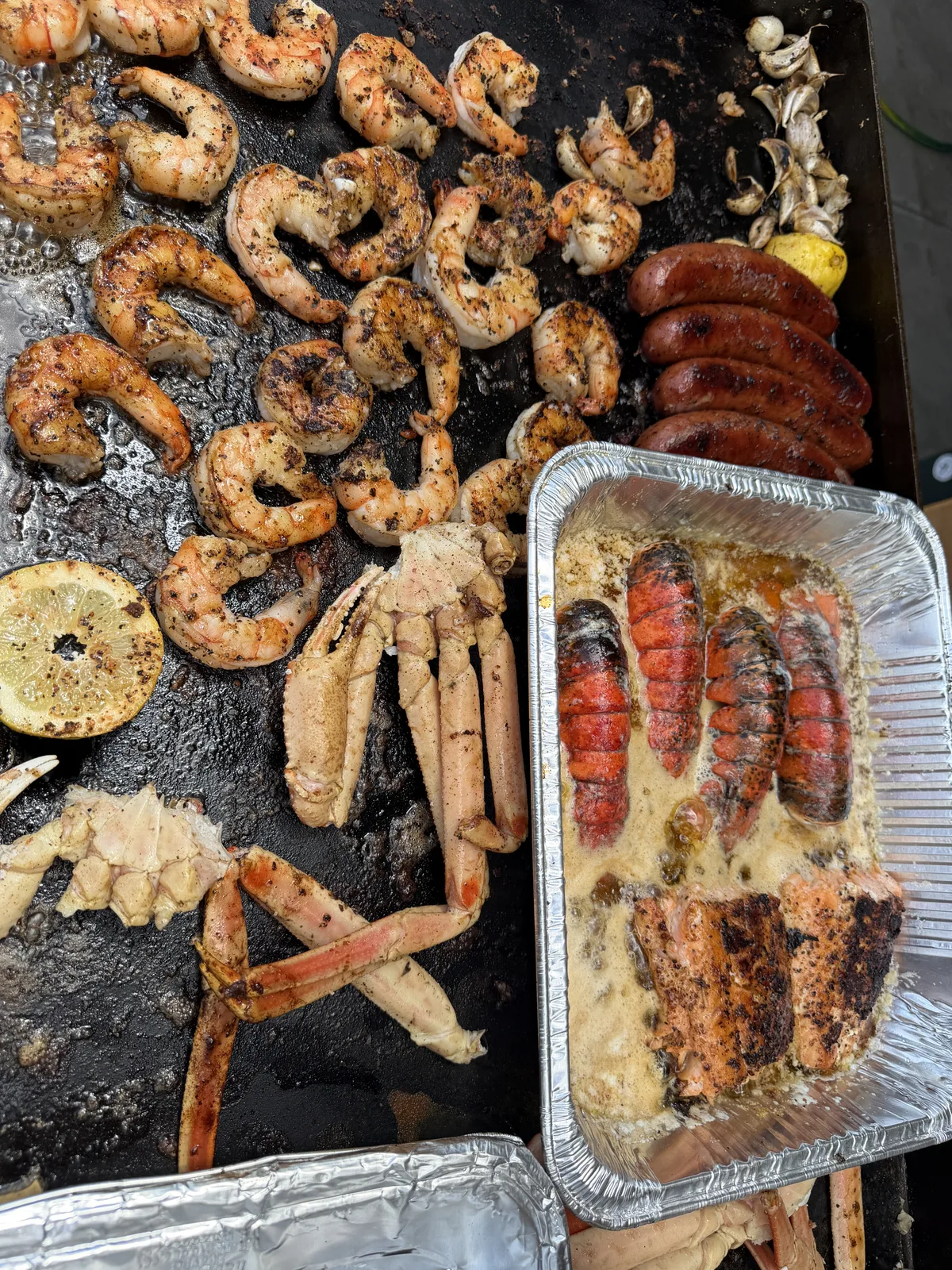
The whole griddle going at once — this is the moment it stops being a plan and starts being dinner
Who We Were Feeding
This one was for Stephanie's family. Missy, Jake, Christina, and Mom and Pop all came over. That's the real reason a griddle beat a pot — with a boil you serve everyone at the same moment or you serve nobody, and with a full table of people arriving on their own schedules, I wanted to be able to hand out food continuously instead of staging one dramatic dump onto butcher paper.
Stephanie ran prep. Everything portioned, everything seasoned, everything sitting in a tray in the order it needed to hit the griddle. I got to do the fun half, which is the only reason this looked calm from the outside. Leo was out there with me helping cook — genuinely helping, not just watching — and Rapphie supervised the entire operation from his little play car, which he did not leave once.
The Seasoning: Meat Church "The Gospel"
One seasoning on the entire cook. Meat Church's The Gospel — their all-purpose rub. It's the coarse black pepper you can see on every single piece of this cook, and it's the reason everything tastes like it belongs on the same plate even though crab, salmon, and andouille have nothing else in common.
There's a real reason to go one-rub on a cook like this. When you're running six proteins across a griddle, they're all sharing the same butter, and that butter is carrying flavor everywhere. Use four different seasonings and the whole surface turns into a muddle. Use one and the butter reinforces it instead of fighting it.
The rub I used: Meat Church — The Gospel (All-Purpose)
Grab it on Amazon here. That's our affiliate link — we earn a small commission at no extra cost to you, and it goes straight back into the family. Read more about how our Amazon tag works if you want the honest version.
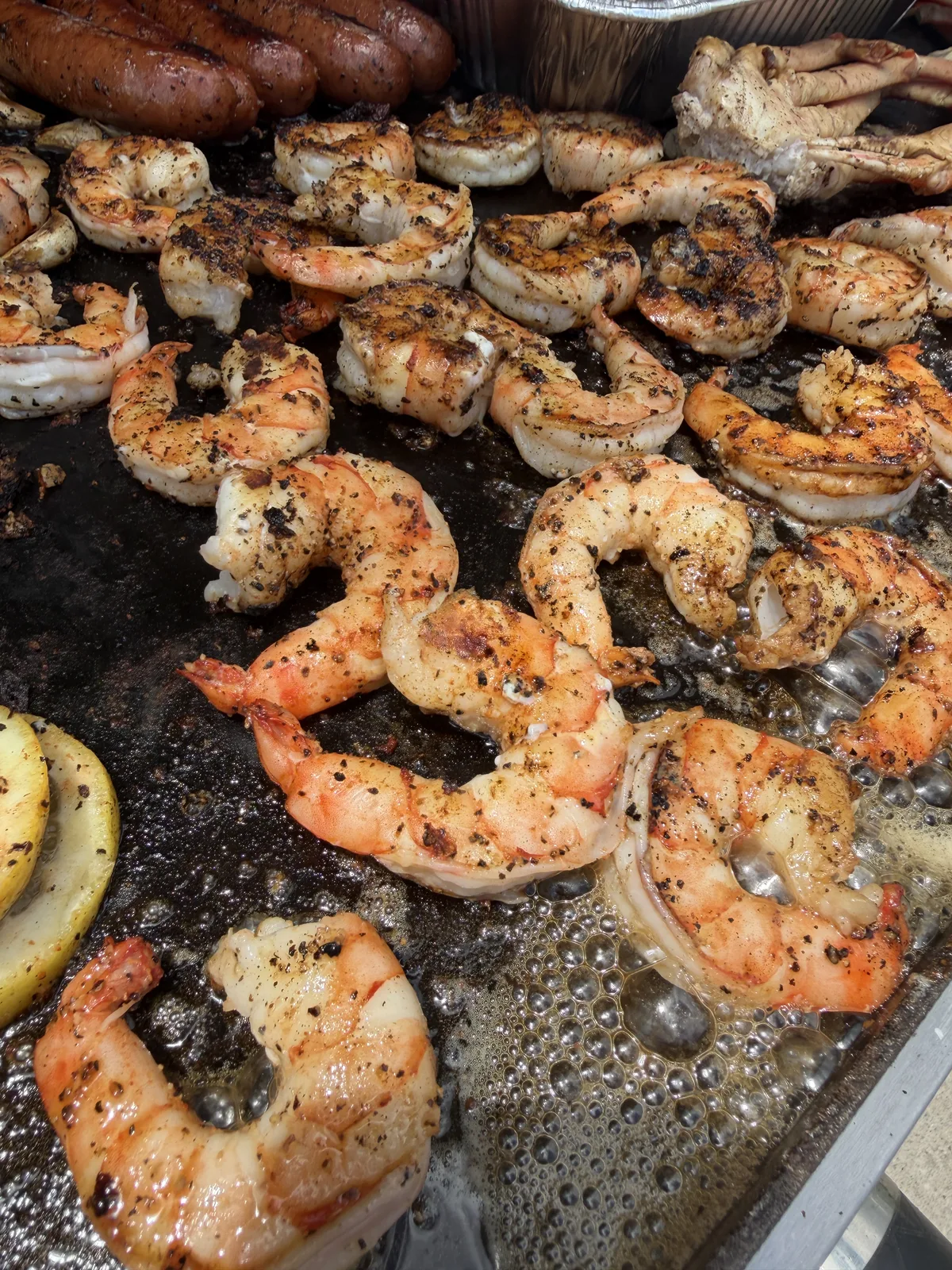
That black pepper crust is the whole point — you don't get that in a pot of water
Order of Operations
This is the part that matters most, and it's where a griddle boil goes wrong. Everything on that flat top cooks at a completely different speed, and shrimp is the fastest thing on it. If you start with the shrimp you will be eating rubber bands.
So: sausage first. It takes the longest, it doesn't overcook, and rendering it early lays down a base of fat that everything after it gets to cook in. Then the crab, which is already cooked when you buy it and just needs to heat through and pick up color. Then the lemons and the whole garlic cloves, which need real time on the surface to sweeten and char. Shrimp dead last, and only once everything else is close to done.
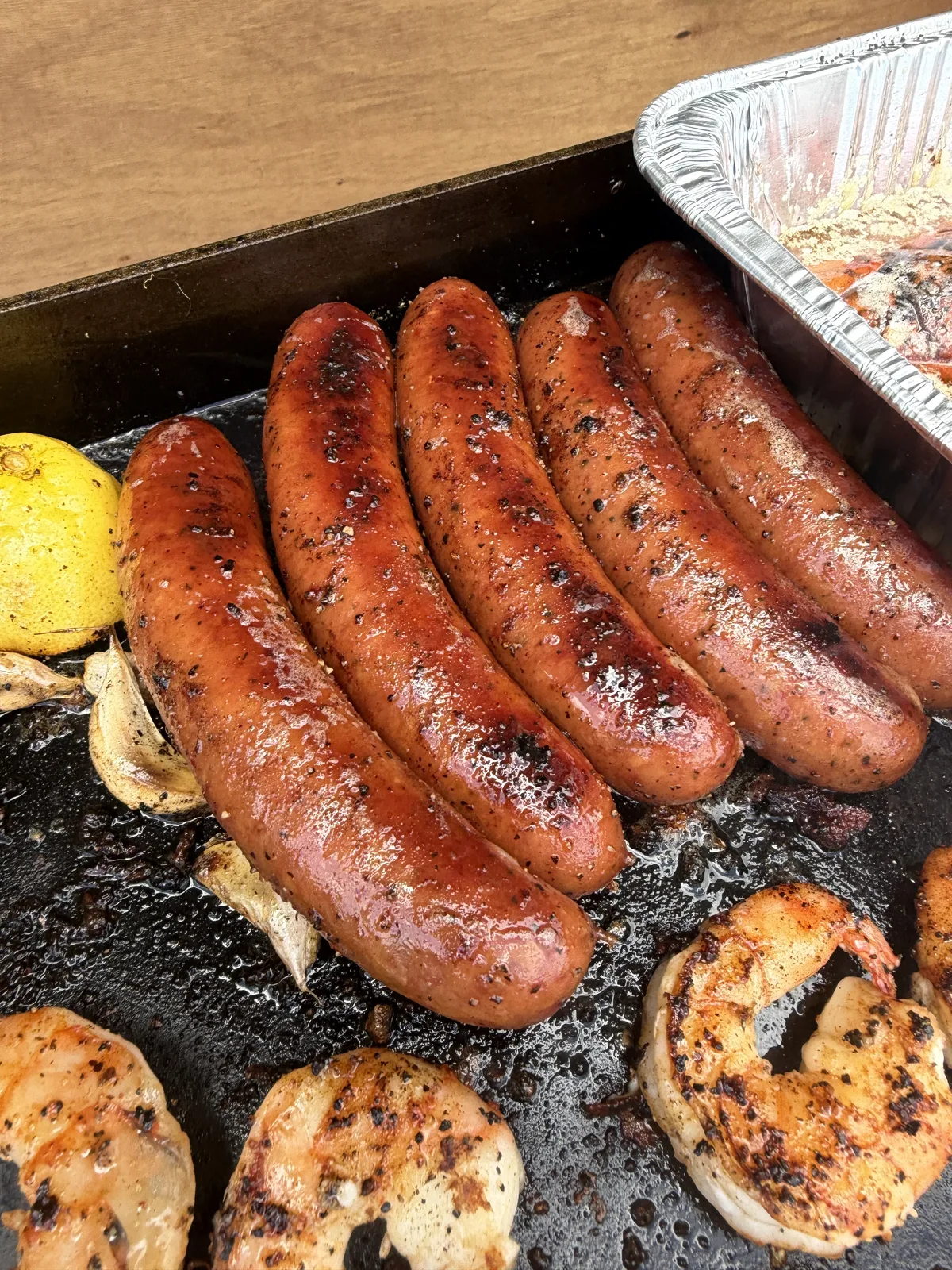
Sausage first — it renders the fat everything else cooks in
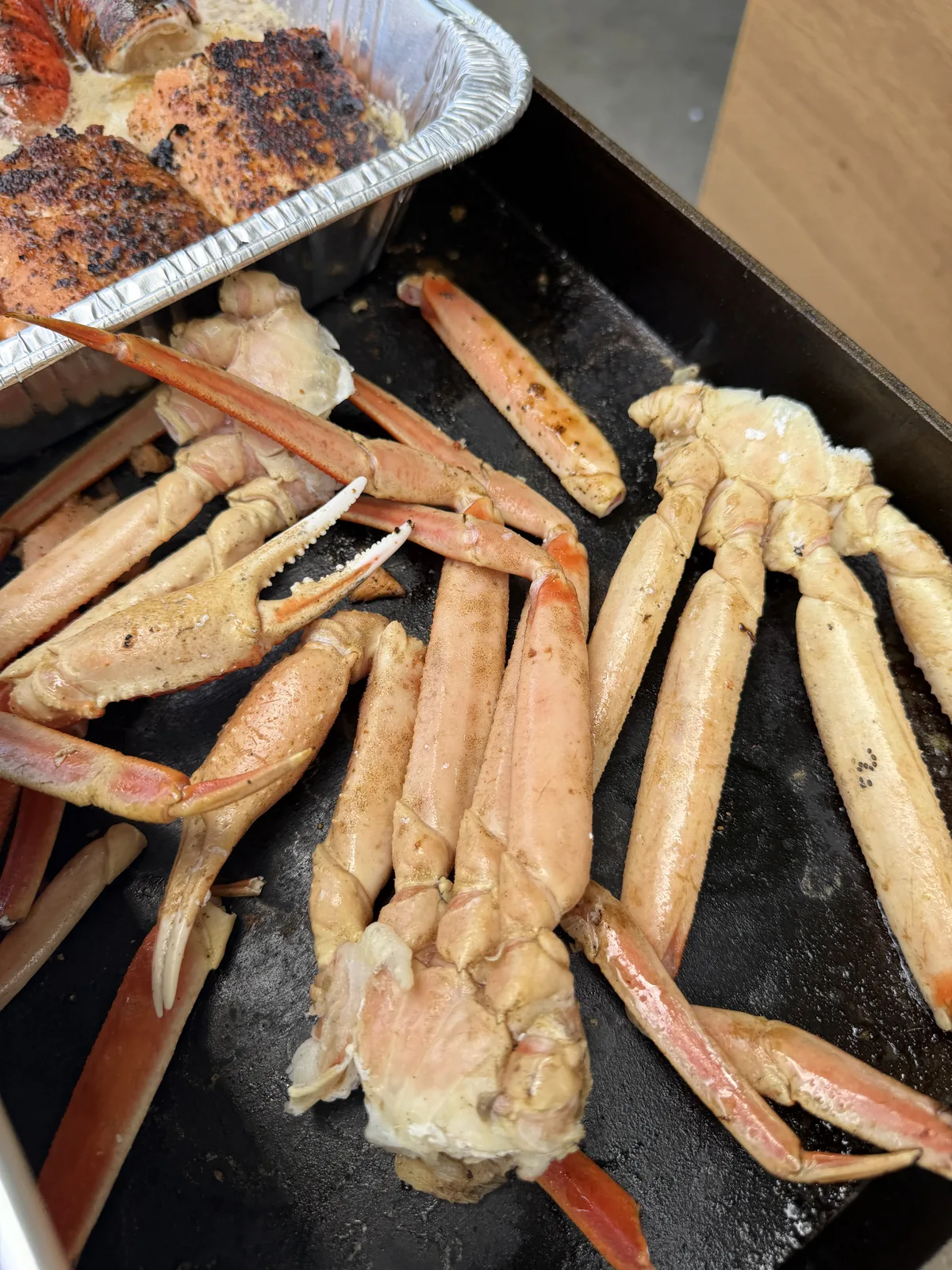
Snow crab — already cooked, so this is about color and heat
The Foil Pan Trick
Lobster tails and salmon do not want a screaming flat top. They want gentle heat and fat. So they went into a foil pan with a serious amount of butter, and the pan went right on the griddle next to everything else.
The pan turns one zone of your griddle into a butter poacher without giving up the space. The salmon gets a hard seared face on the flat top first, then goes into the pan to finish. The lobster just lives in the butter the whole time. And when everything's done you have a pan of seafood butter that has salmon fond, lobster, garlic, and Gospel rub in it, which you then spoon over literally everything else on the table.
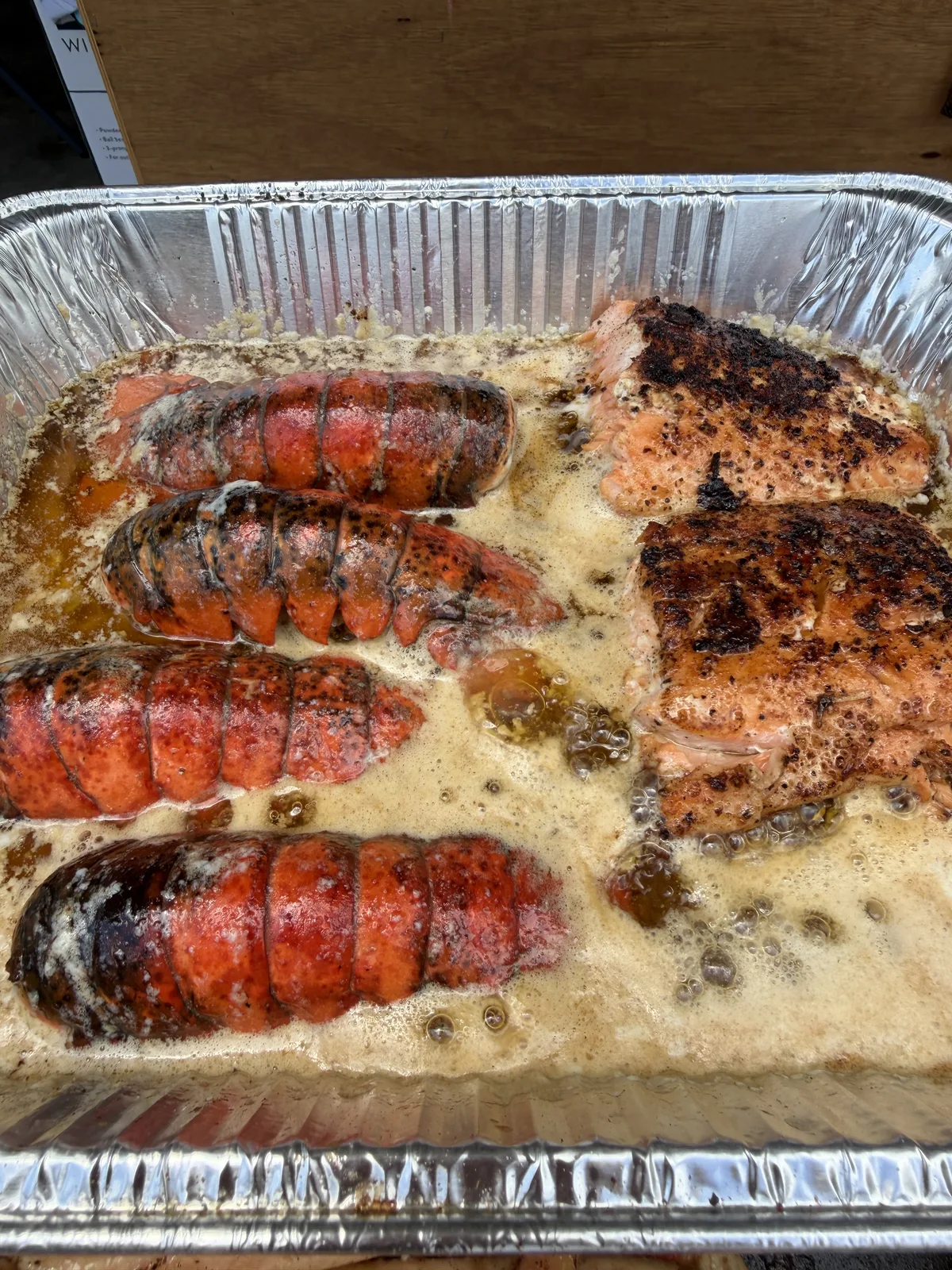
Do not throw this butter away. This butter is the best thing on the table.
Lemons and Garlic, Face Down
Charred lemon is not a garnish. Putting a lemon cut-side down on a hot griddle cooks off the raw sharpness and caramelizes the sugar in it, so when you squeeze it over the crab it reads as sweet and round instead of sour. Raw lemon fights rich food. Charred lemon agrees with it.
Same logic for the garlic. Whole cloves, skins on, left alone in a corner of the griddle until they go soft and nutty. People pick at them all night.
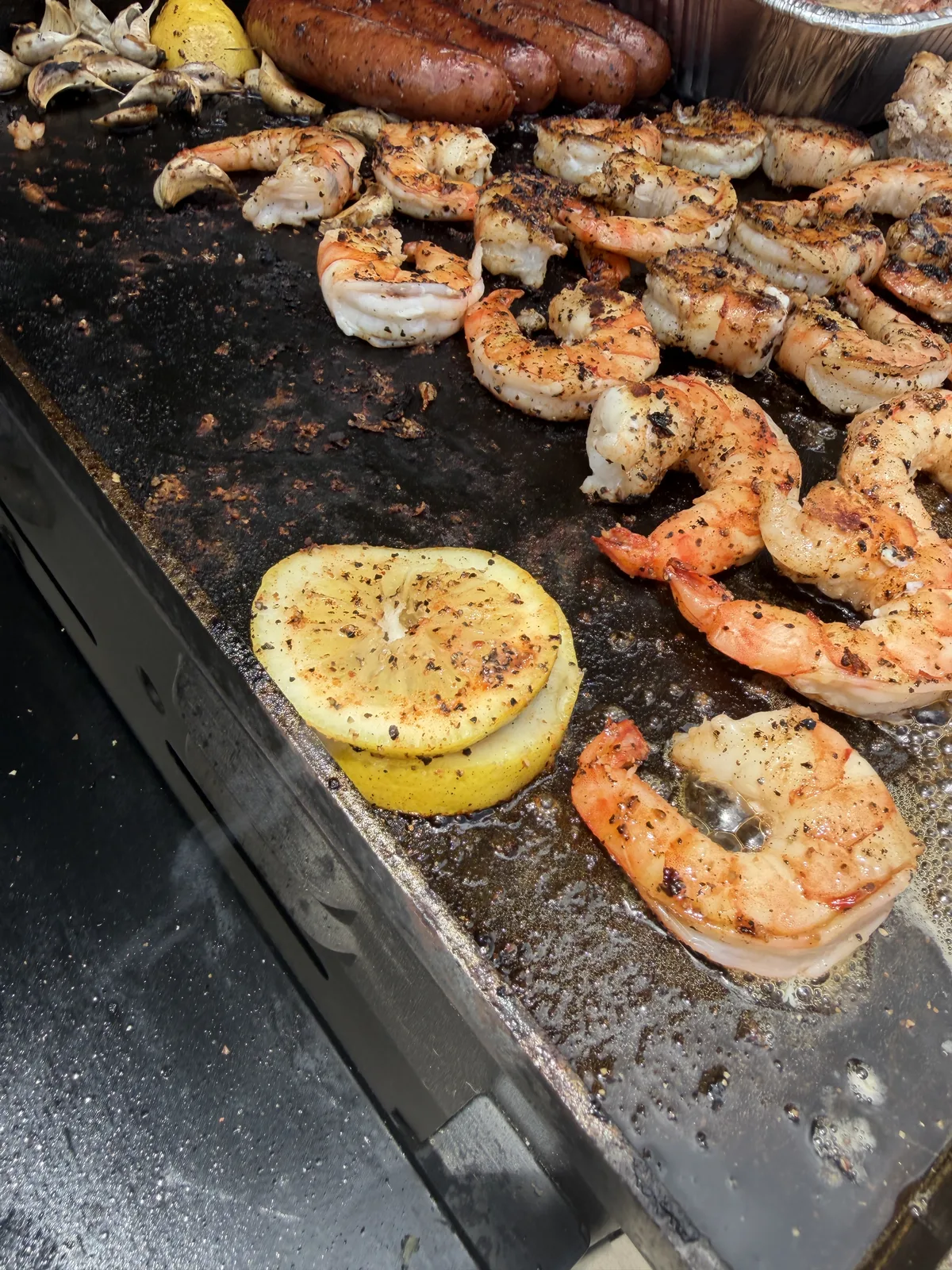
Cut side down and left alone
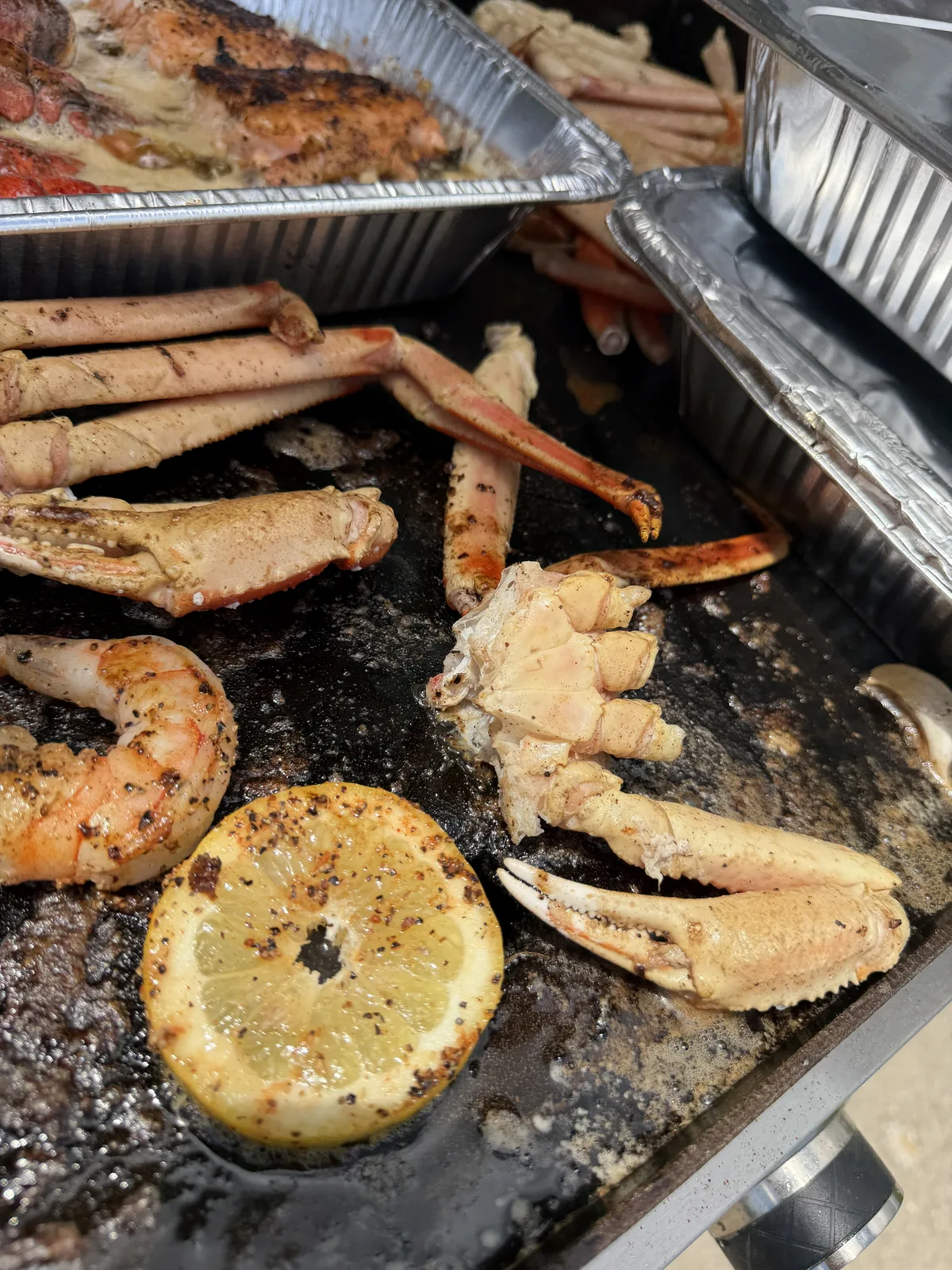
Sweet, round, and nothing like a raw wedge
Watch It Cook
Serving a Griddle Boil
The best part of doing it this way: nothing has to be ready at the same time. Sausage and crab came off early and went straight to the table for people to start on. Shrimp came off in waves. Lobster and salmon landed last, still in their butter.
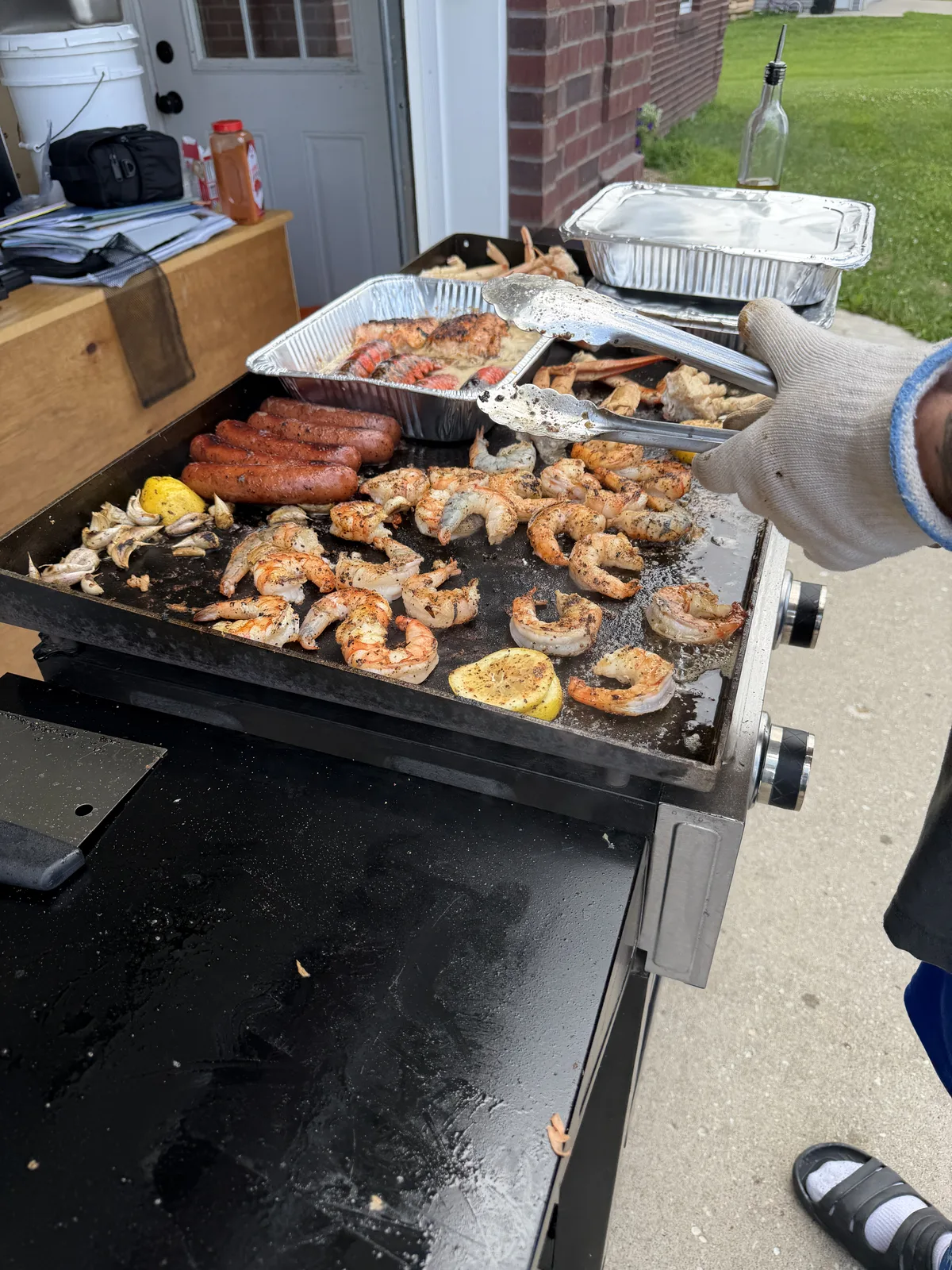
Plating straight off the griddle into trays — food kept moving all night
Nobody stood around waiting. Nobody's crab went cold while the shrimp finished. And I got to actually talk to people between batches instead of standing over a pot watching a timer.
What I'd Tell You Before You Try It
- One seasoning across the whole cook. The butter carries flavor between everything on that griddle. Multiple rubs turn into mud. Pick one all-purpose rub and commit.
- Shrimp goes last. It's the fastest thing on the griddle by a wide margin. Cook it first out of enthusiasm and you'll regret it.
- Sausage first, for the fat. Rendering it early gives everything after it something better than plain oil to cook in.
- Use a foil pan for the delicate stuff. Lobster and salmon get punished by direct flat-top heat. A pan of butter on the griddle solves it without costing you space.
- Char the lemons. Cut side down. It's a thirty-second decision that changes how the whole plate tastes.
- Save the butter. The foil pan is the sauce. Spoon it over everything.
Worth Every Bit of the Cleanup
Stephanie's whole family around the table, Leo working the griddle next to me, Rapphie holding down the fort in his push play car, and a pile of crab legs disappearing faster than I could plate them. This is the kind of cooking that's actually about the people.
Got a griddle boil combination we should try, or a rub you swear by for seafood? Drop it in the comments.
Join the Conversation