Pizza night is the easiest sell in this house. Nobody has to be talked into it, nobody asks what's for dinner, and everyone finds a job. This week we did the whole thing ourselves — dough proofed on the stovetop, sauce seasoned in a container, cheese grated off a block, and two pies built side by side so nobody had to negotiate toppings.
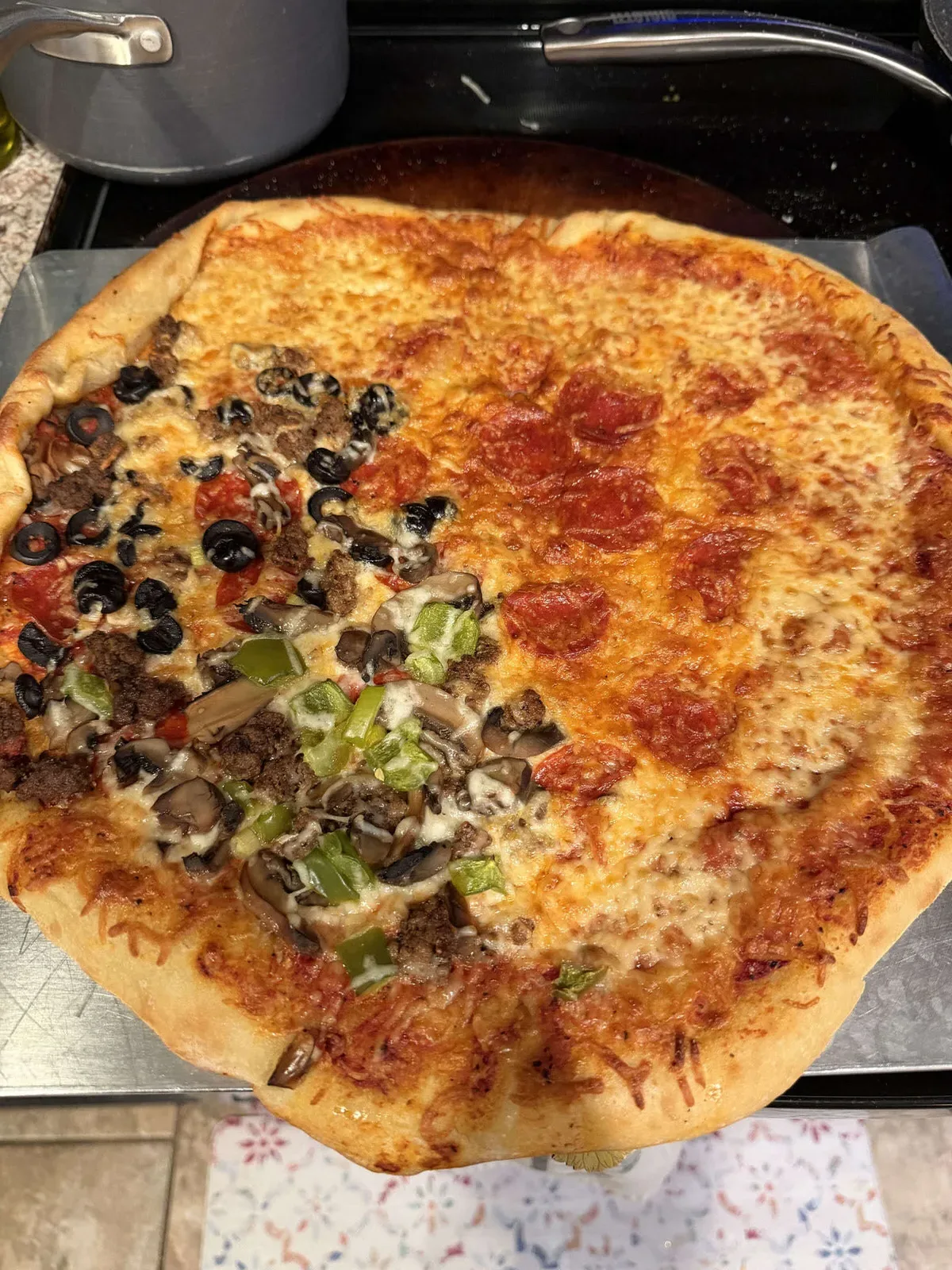
Half pepperoni, half supreme — the McGennis peace treaty
Start With the Dough, Because the Dough Needs Time
Everything else on pizza night takes twenty minutes. The dough takes an hour and it does not care about your schedule. So it goes first, always. We portioned it into rounds, dropped each one into a lightly oiled pan, and set them on the warm stovetop to rest while the oven came up to temperature.
A little oil in the pan is not optional. It keeps the skin from drying out and, more importantly, it means the round lifts out in one piece instead of tearing when you go to stretch it. Cover them loosely if your kitchen runs dry.
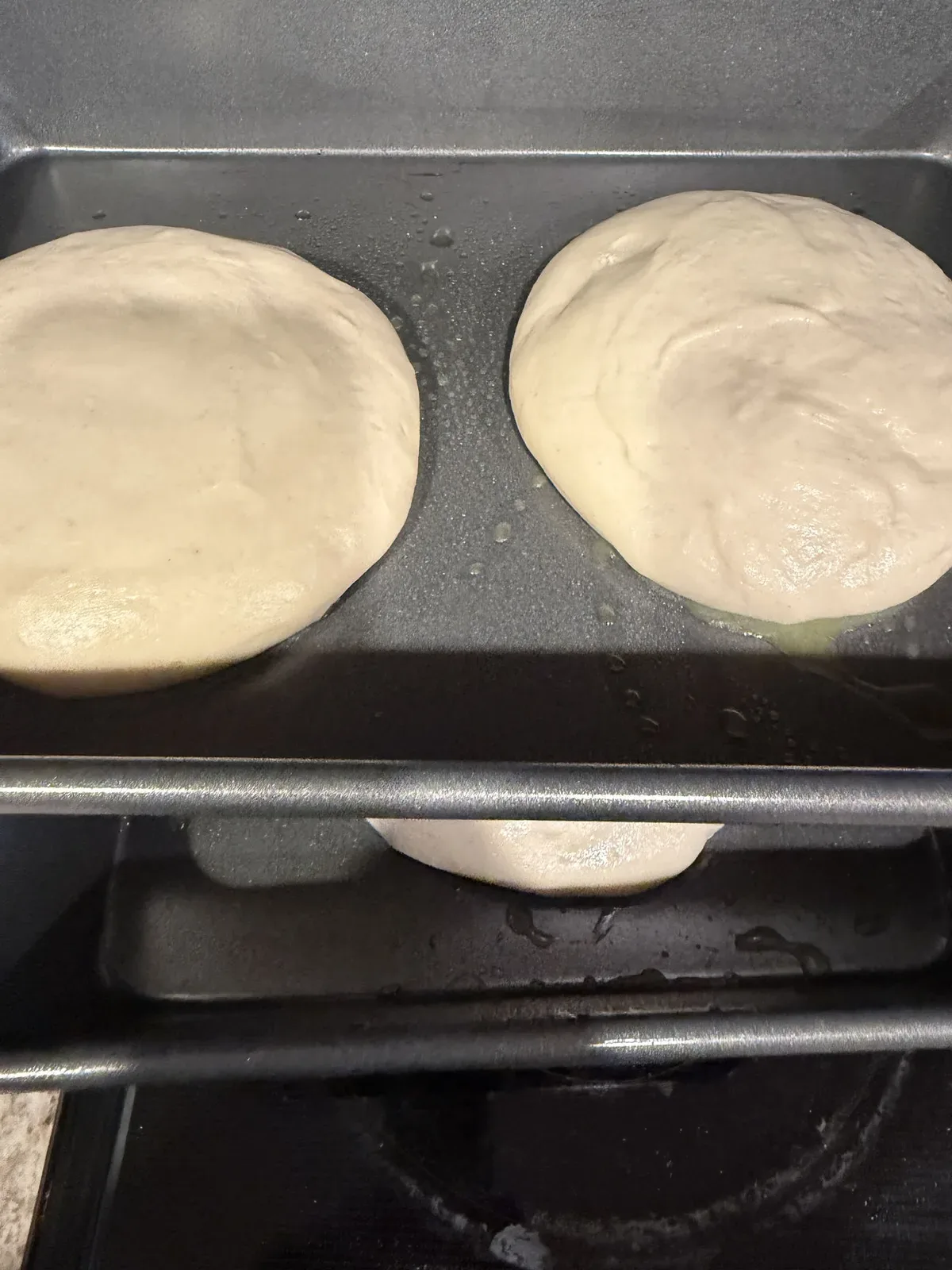
Portioned, oiled, and left alone — the hardest step is waiting
You want the rounds relaxed, not cold and not hot. A tight, cold ball fights you the whole way and springs back every time you stretch it. Give it the full rest and it will open up under your hands with almost no effort.
Browning the Beef
Ground beef goes on the pizza cooked, never raw. Raw meat on a pie either finishes gray and steamed or leaves grease pooling on top of your cheese. Neither is what you want. Into a hot skillet it went, broken up as it cooked.
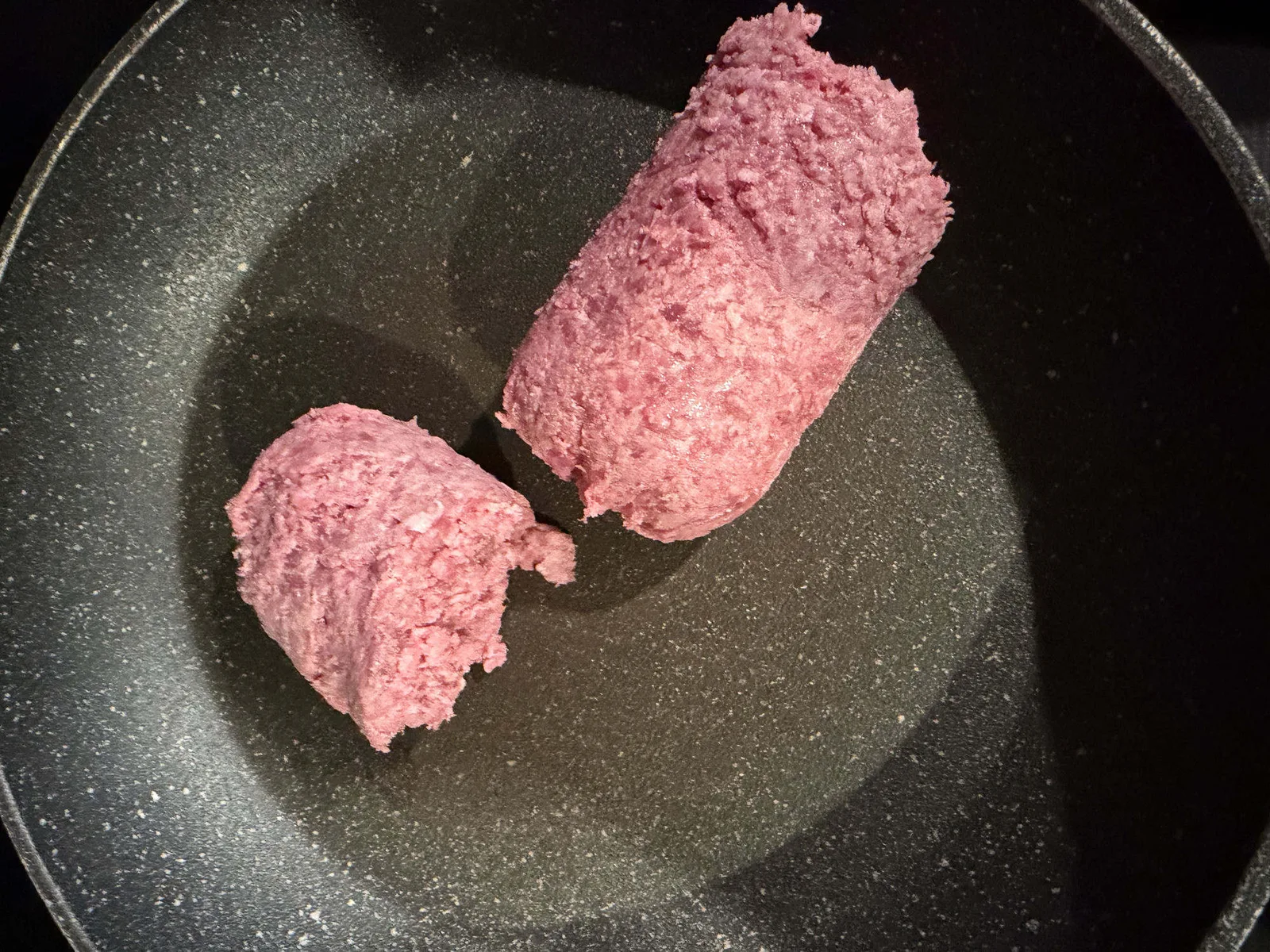
Straight into the pan
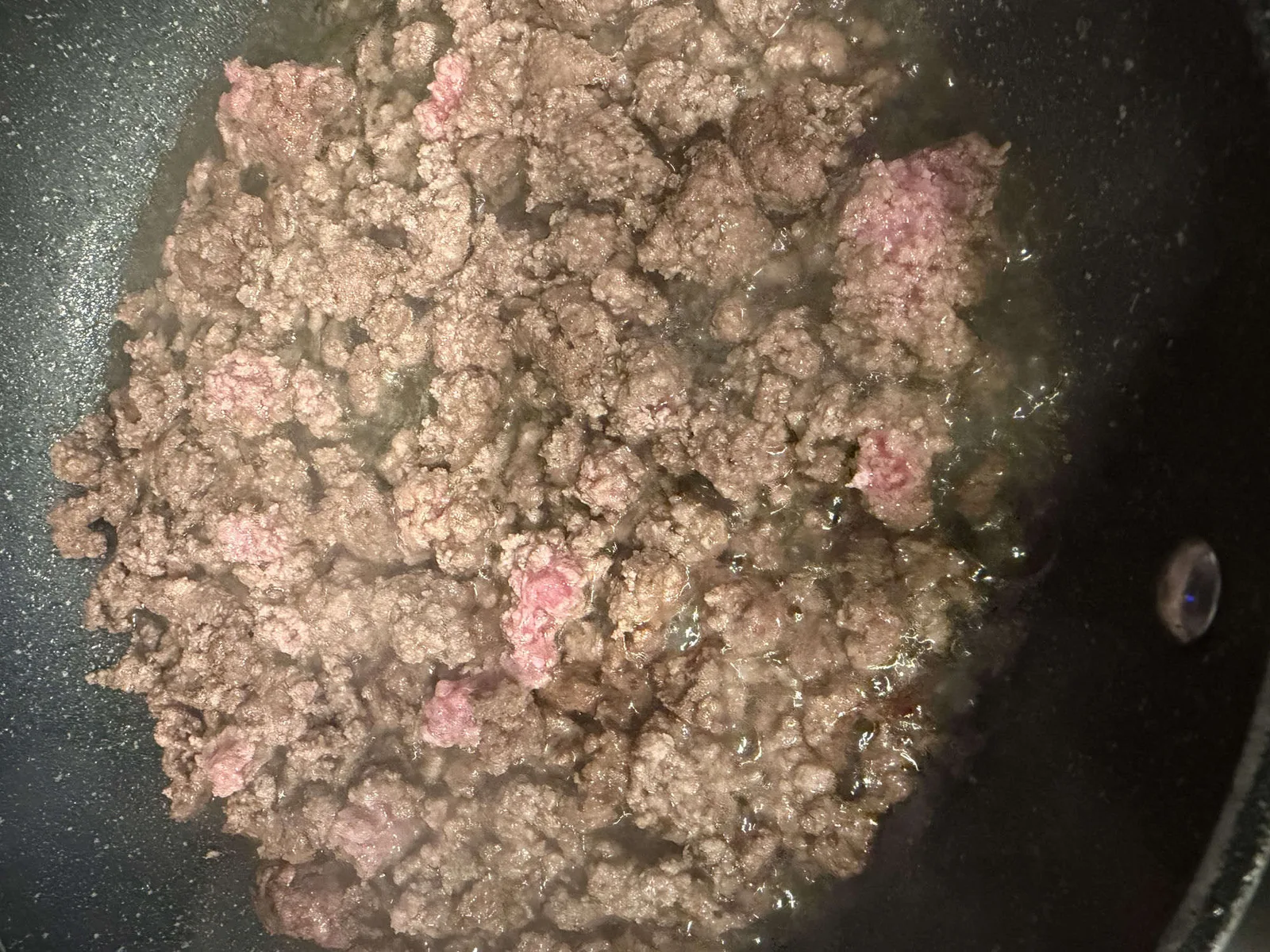
Broken up small — pizza wants crumbles, not clumps
Break it up smaller than feels necessary. Big clumps of beef roll off the slice on the way to your mouth, and they hog the space where the cheese should be. Then drain it. Drain it well. Every bit of grease you leave in the pan is grease that does not end up sitting on top of the pizza.
The Sauce Is the Easy Part
Pizza sauce is one of the few sauces that gets worse when you cook it. It is going into a screaming hot oven on top of the dough — that is the cooking. Simmer it beforehand and by the time it comes out of the oven it has gone flat and slightly bitter.
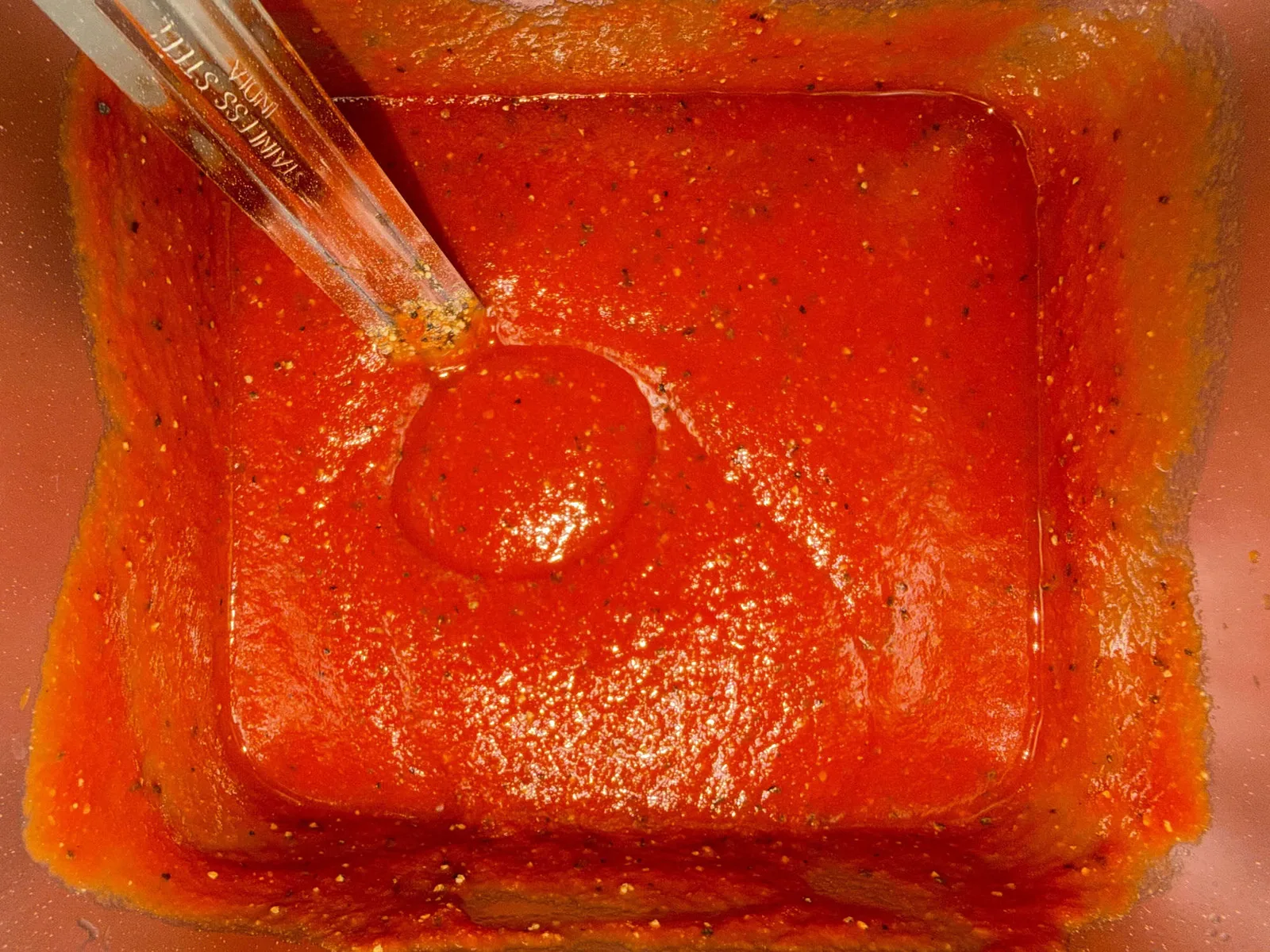
Stirred, seasoned, not cooked — the oven does that part
So we stirred it together cold and let it sit while everything else came along. Taste it before it goes on the pie. If it tastes flat in the container it will taste flat on the pizza, and there is no fixing it once the cheese is on.
Grate Your Own Cheese. Seriously.
This is the one thing on this whole list that will change your pizza the most, and it costs nothing but five minutes. Pre-shredded cheese is coated in starch so the bag does not clump. That coating is exactly what stops it from melting into a sheet. It goes greasy and separated instead of stretchy.
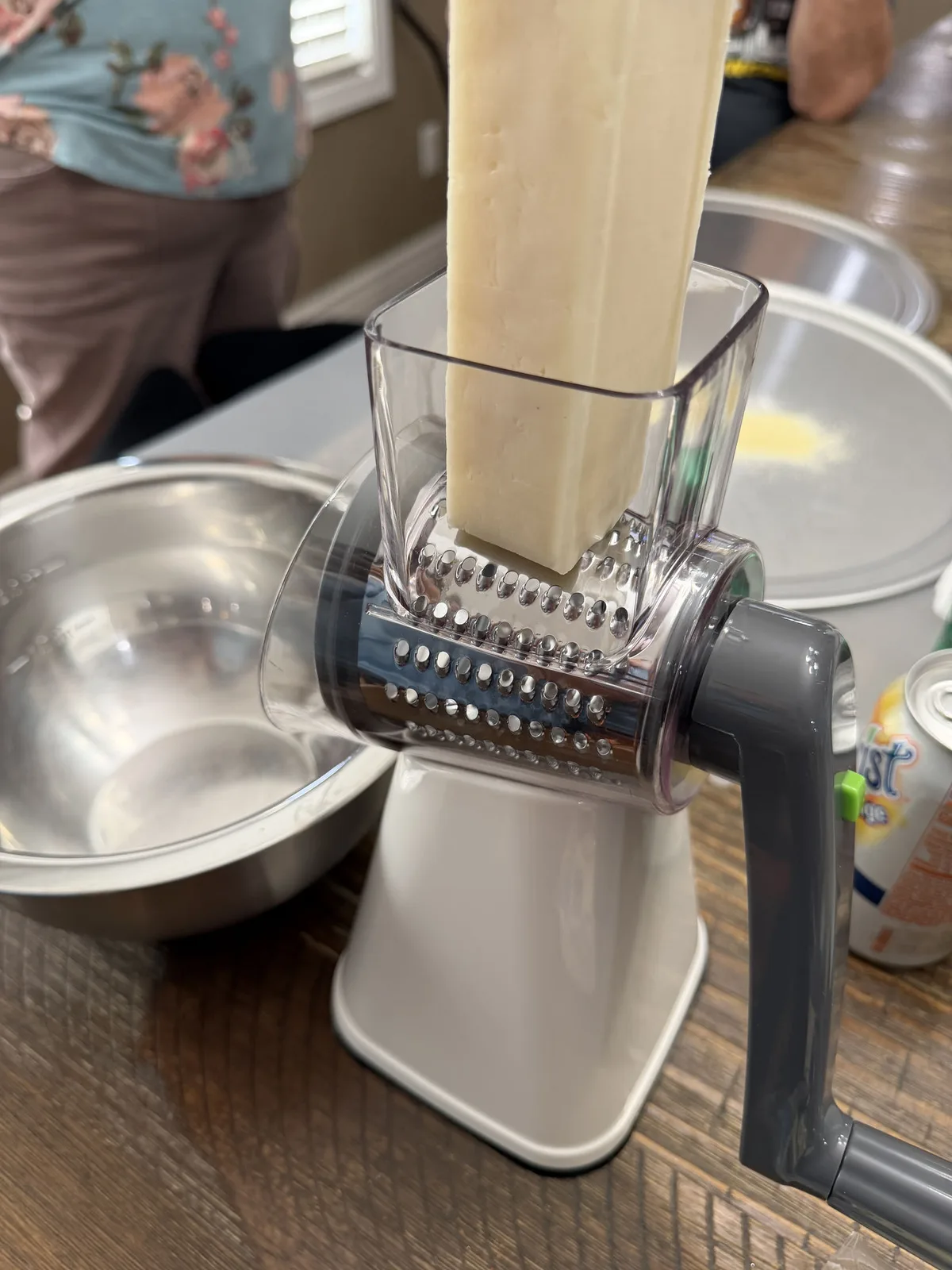
A hand-crank rotary grater and a block of cheese
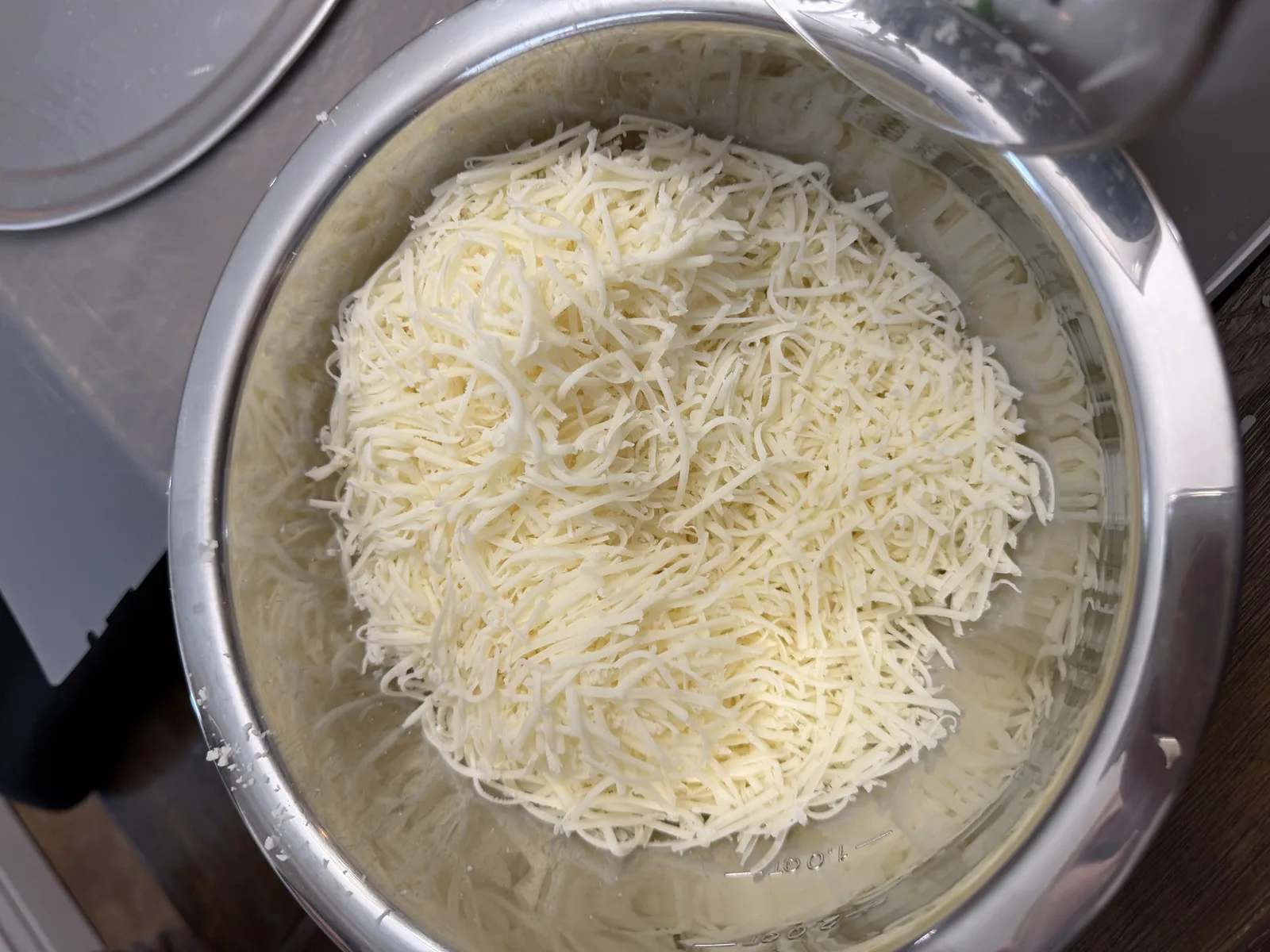
Worth every one of the five minutes
The rotary grater is the trick that makes this painless. No knuckles, no box grater, and a kid can run the crank while you do something else. Leo will grate cheese for as long as you let him.
Building Two Pies at Once
Order matters: sauce, then cheese, then toppings. Cheese under the toppings does two things — it keeps the crust from going soggy under the sauce, and it gives the toppings something to grip so they do not slide off the first slice.
We stretched two rounds out on pans and split each one down the middle. Pepperoni on one half, the works on the other: browned beef, mushrooms, green peppers, black olives. Nobody had to compromise and nobody had to pick anything off.
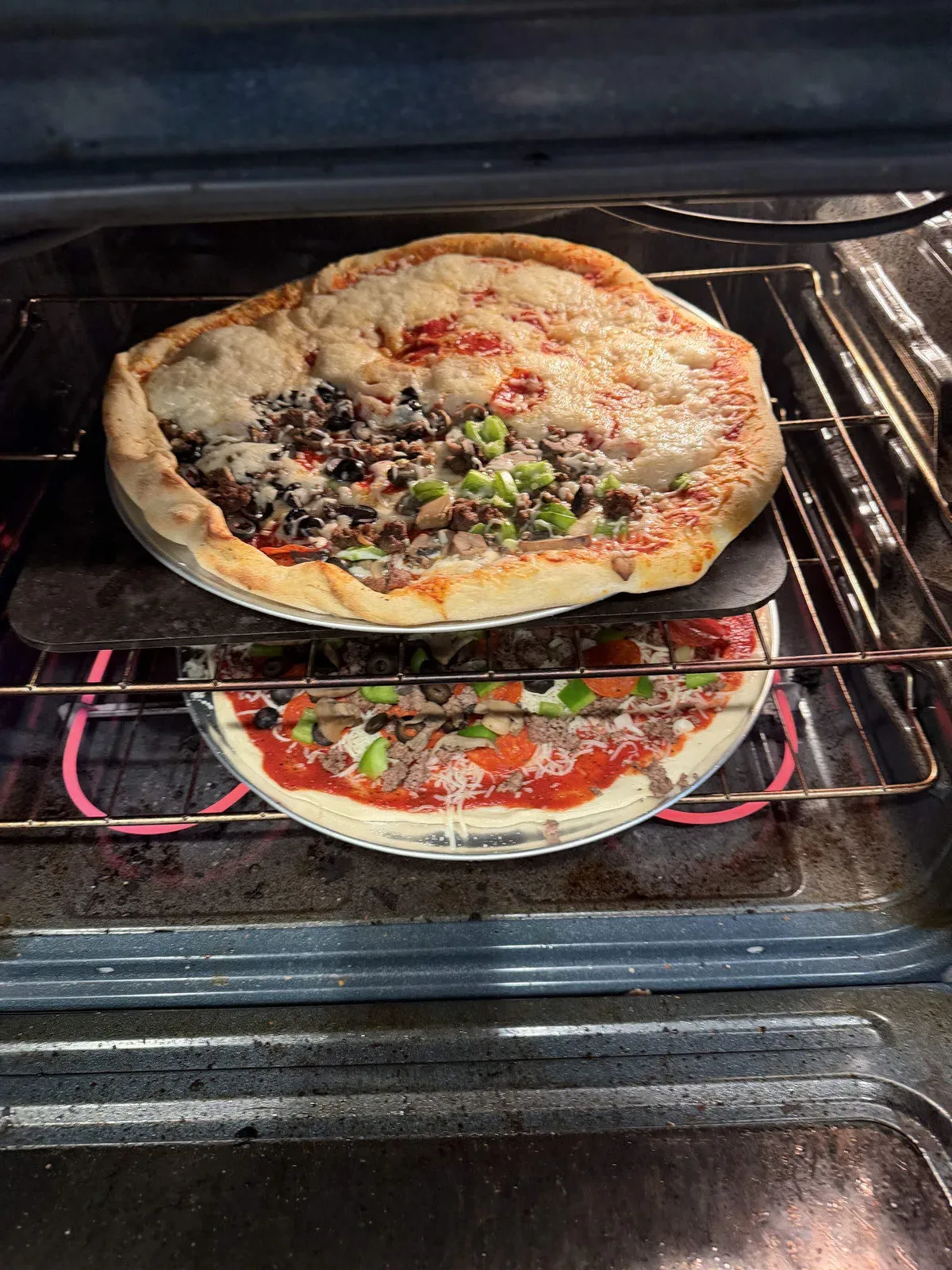
One coming out, one going in — the pizza night assembly line
Run the oven as hot as it will go and put the pizza low in it. Home ovens do not get anywhere near pizzeria temperature, so all the heat you can get from underneath is heat that goes into crisping the bottom of the crust instead of just melting the top.
Eating
Let it sit two or three minutes before you cut it. Cheese straight out of the oven is molten and it will slide off the slice in one sheet and take every topping with it. Two minutes of patience and it sets up just enough to hold together.
Out of the oven and about to disappear
Then it was gone. That is the whole review. Pizza night does not need a verdict.
What We Learned This Week
- Dough first, everything else second. It is the only component with a clock on it. Start it and the rest of the night is relaxed.
- Grate the cheese yourself. The anti-caking starch on pre-shredded cheese is the single biggest reason home pizza does not melt like pizzeria pizza.
- Cook and drain the meat. Raw beef steams on the pie and leaves grease on top of your cheese. Cook it, break it small, drain it.
- Don't cook the sauce. The oven cooks it. Simmering first just takes the brightness out of it.
- Cheese goes under the toppings. It waterproofs the crust and glues everything down.
- Split the pie. Half and half ends the topping argument before it starts.
From Scratch Friday Week 5 in the Books
Homemade pizza, start to finish, in our own kitchen. Cheaper than delivery, better than delivery, and everybody got a job.
Got a topping combination we need to try, or a crust trick that works in a regular home oven? Leave it in the comments — pizza night comes back around fast.
Join the Conversation